JURASSIC WORLD
Directed by Colin Trevorrow
***
Before Jurassic World even starts, we know that the logic here is all wrong. If we're meant to believe that all of the Jurassic films exist in the same universe (and there's no reason why we shouldn't) then it's patently ridiculous that at this point - after three separate, horrible incidents involving genetically-engineered dinosaurs killing multiple innocent people - to contemplate that within this same universe, intelligent people would think that it is, in fact, okay to fill a theme park with these same dinosaurs. Is there anyway you can even fathom this happening in our current reality? One of the smartest things that Jurassic World does is acknowledge its franchise's violent past, but only with the original, iconic Jurassic Park from 1993. Jurassic Park is still, in 2015, a fascinating film that still has the capacity for wonder; it's about as logical as it can be, considering its subject matter. It's two subsequent sequels, The Lost World and Jurassic Park III, are failures because they exist within that logic - mainly, that we'd still be trying to keep dinosaurs in controlled captivity after the tragedies in the first film. Luckily, Jurassic World, coming out twenty-two years after Park, doesn't hold itself to that same standard. It understands its own ridiculousness, and wears it like a badge of honor. It doesn't aspire toward intelligence, it aspires toward adventure, and the result is probably the best film in the franchise since the original classic.
Monday, June 15, 2015
Sunday, June 14, 2015
Me and Earl and the Dying Girl (**)
ME AND EARL AND THE DYING GIRL
Directed by Alfonso Gomez-Rejon
**
The first half-hour of Sundance indie Me and Earl and the Dying Girl was close to unbearable to me. It's overwhelming supply of indie dramedy snark felt suffocating. Here's Nick Offerman inexplicably cuddling a cat. Here's the inspiring history teacher with forearm and neck tattoos. Here's a voiceover narration that allows you to see just how sardonic and self-deprecating our protagonist can be (hint: very). This is a movie that tries to incorporate aspects of satire and absurdity in what is ultimately a YA melodrama about leukemia. The mix doesn't always feel right. But once Dying Girl gets past its incessant need to impress us (there's a lot of movie posters in the background, close-ups of book spines, classic movies playing randomly on screens in front of a passing camera), it allows us to realize how charming its characters are. This is a film told from the point-of-view of a male high school senior, not exactly unexplored territory, but the film's tale of unorthodox friendship in the face of mortality has moments of poignancy and deliberate frankness that felt refreshing compared to most teenage dramas. The film itself hides behind an austere idea of what this film should be, but that veneer doesn't effect its actors, who give the film its most effective presence.
Directed by Alfonso Gomez-Rejon
**
The first half-hour of Sundance indie Me and Earl and the Dying Girl was close to unbearable to me. It's overwhelming supply of indie dramedy snark felt suffocating. Here's Nick Offerman inexplicably cuddling a cat. Here's the inspiring history teacher with forearm and neck tattoos. Here's a voiceover narration that allows you to see just how sardonic and self-deprecating our protagonist can be (hint: very). This is a movie that tries to incorporate aspects of satire and absurdity in what is ultimately a YA melodrama about leukemia. The mix doesn't always feel right. But once Dying Girl gets past its incessant need to impress us (there's a lot of movie posters in the background, close-ups of book spines, classic movies playing randomly on screens in front of a passing camera), it allows us to realize how charming its characters are. This is a film told from the point-of-view of a male high school senior, not exactly unexplored territory, but the film's tale of unorthodox friendship in the face of mortality has moments of poignancy and deliberate frankness that felt refreshing compared to most teenage dramas. The film itself hides behind an austere idea of what this film should be, but that veneer doesn't effect its actors, who give the film its most effective presence.
Monday, June 8, 2015
Spy (***)
SPY
Written and Directed by Paul Feig
***
After I saw Welcome To Me, I was impressed by Kristen Wiig's continued efforts to carve out a filmography within quirky independent films, as opposed to taking advantage of the commercial appeal of her breakout hit Bridesmaids. On this very blog, I mentioned how Wiig could have easily cashed in with more mainstream projects like her Bridesmaids co-star Melissa McCarthy (both actresses were nominated for Oscars for Bridesmaids - McCarthy for Best Supporting Actress; Wiig for co-writing the screenplay). After seeing McCarthy's latest star turn, Spy, I find myself pleased with the two, differing approaches these comedic performers have chosen. Wiig's appeal goes hand in hand with her self-molded image as an oddity, she likes playing the emotional house of cards. McCarthy has a much broader appeal. She can be funny on screen in so many different ways, it's almost intimidating. She's transformed herself into a legit movie star, and one who has a deft understanding on how to play each scene to her advantage. Almost anyone in a scene with her can come off funny just by her presence, and yet, she's almost always the true star of any scene she happens to be in. Spy allows her to both show off her whirlwind improvisational abilities and perform the physical comedy she's notorious for. It's a true star vehicle and one that might show that America is ready for something new in the movies.
Written and Directed by Paul Feig
***
After I saw Welcome To Me, I was impressed by Kristen Wiig's continued efforts to carve out a filmography within quirky independent films, as opposed to taking advantage of the commercial appeal of her breakout hit Bridesmaids. On this very blog, I mentioned how Wiig could have easily cashed in with more mainstream projects like her Bridesmaids co-star Melissa McCarthy (both actresses were nominated for Oscars for Bridesmaids - McCarthy for Best Supporting Actress; Wiig for co-writing the screenplay). After seeing McCarthy's latest star turn, Spy, I find myself pleased with the two, differing approaches these comedic performers have chosen. Wiig's appeal goes hand in hand with her self-molded image as an oddity, she likes playing the emotional house of cards. McCarthy has a much broader appeal. She can be funny on screen in so many different ways, it's almost intimidating. She's transformed herself into a legit movie star, and one who has a deft understanding on how to play each scene to her advantage. Almost anyone in a scene with her can come off funny just by her presence, and yet, she's almost always the true star of any scene she happens to be in. Spy allows her to both show off her whirlwind improvisational abilities and perform the physical comedy she's notorious for. It's a true star vehicle and one that might show that America is ready for something new in the movies.
Monday, May 18, 2015
Mad Max: Fury Road (***1/2)
MAD MAX: FURY ROAD
Directed by George Miller
***1/2
Mad Max: Fury Road is demented poetry; watching it is probably the closest I'll ever come to mainlining amphetamines. The film is the fourth of the Mad Max series, and while all have been directed by Australian filmmaker George Miller, it's the first film in the franchise in 30 years, since 1985's Mad Max Beyond Thunderdome. This is also the first one in which the titular Max is played by Tom Hardy, replacing Mel Gibson who built his stardom on the character of Max Rockatansky. Hardy isn't the movie star that Gibson was, but neither was Gibson when the initial Mad Max film arrived. I should admit early: I've never seen any of the previous Mad Max films. Fury Road is my inaugural stroll through George Miller's dystopian universe and it's a doozy. This film doesn't care much about characterization, but it doesn't completely ignore it either. It's the rare film that can tell you all you need to know about its characters through its action sequences, and Fury Road has plenty of those. More than anything, Fury Road is a trademark of a smart director, a person who sees that a car chase and a story don't have to be mutually exclusive, that you can make an action film with above average intelligence without alienating your intended audience.
Directed by George Miller
***1/2
Mad Max: Fury Road is demented poetry; watching it is probably the closest I'll ever come to mainlining amphetamines. The film is the fourth of the Mad Max series, and while all have been directed by Australian filmmaker George Miller, it's the first film in the franchise in 30 years, since 1985's Mad Max Beyond Thunderdome. This is also the first one in which the titular Max is played by Tom Hardy, replacing Mel Gibson who built his stardom on the character of Max Rockatansky. Hardy isn't the movie star that Gibson was, but neither was Gibson when the initial Mad Max film arrived. I should admit early: I've never seen any of the previous Mad Max films. Fury Road is my inaugural stroll through George Miller's dystopian universe and it's a doozy. This film doesn't care much about characterization, but it doesn't completely ignore it either. It's the rare film that can tell you all you need to know about its characters through its action sequences, and Fury Road has plenty of those. More than anything, Fury Road is a trademark of a smart director, a person who sees that a car chase and a story don't have to be mutually exclusive, that you can make an action film with above average intelligence without alienating your intended audience.
Thursday, May 14, 2015
Far From the Madding Crowd (***1/2)
FAR FROM THE MADDING CROWD
Directed by Thomas Vinterberg
***1/2
The literature of the Romantic-era poet and novelist Thomas Hardy is amongst the most-read of the Victorian period. Like his predecessors, Charles Dickens and Jane Austen, his work is so rich with narrative and heavy with drama that no one adaptation can really suffice. There are many ways to tell a story, but it takes a special kind of story to continue drawing intrigue with each subsequent retelling. This latest version of Far From the Madding Crowd, I must admit, is the first that I've ever seen, but showcases the novel's lush, elegant aspects; both a testament to the density of the narrative and a strong argument for the novel's cinematic capabilities. The film is directed by Thomas Vinterberg, the Danish filmmaker famous as the co-founder (with the notorious Lars von Trier) of the Earth-shattering Dogme 95 movement. I'm not sure what the man who directed The Celebration would think of directing this version of Madding Crowd. If anything, this is the complete antithesis of a Dogme film - it's storytelling manipulation in its purest form. People evolve and filmmakers are no exception. The seventeen-year evolution from The Celebration in 1998 to this year's Madding Crowd shows a strong, consistent growth from one of our most under-sung filmmakers.
Directed by Thomas Vinterberg
***1/2
The literature of the Romantic-era poet and novelist Thomas Hardy is amongst the most-read of the Victorian period. Like his predecessors, Charles Dickens and Jane Austen, his work is so rich with narrative and heavy with drama that no one adaptation can really suffice. There are many ways to tell a story, but it takes a special kind of story to continue drawing intrigue with each subsequent retelling. This latest version of Far From the Madding Crowd, I must admit, is the first that I've ever seen, but showcases the novel's lush, elegant aspects; both a testament to the density of the narrative and a strong argument for the novel's cinematic capabilities. The film is directed by Thomas Vinterberg, the Danish filmmaker famous as the co-founder (with the notorious Lars von Trier) of the Earth-shattering Dogme 95 movement. I'm not sure what the man who directed The Celebration would think of directing this version of Madding Crowd. If anything, this is the complete antithesis of a Dogme film - it's storytelling manipulation in its purest form. People evolve and filmmakers are no exception. The seventeen-year evolution from The Celebration in 1998 to this year's Madding Crowd shows a strong, consistent growth from one of our most under-sung filmmakers.
Monday, May 11, 2015
Welcome To Me (**1/2)
WELCOME TO ME
Directed by Shira Piven
**1/2
Kristen Wiig's post-Saturday Night Live career has been exciting and unforeseen. She could've taken a path similar to her Bridesmaids co-star Melissa McCarthy, accepting any and all major studio offers for broad, belligerent comedies made for mass box office appeal. Wiig has taken a different route, choosing roles that intentionally test her abilities as an actress and expand the limits of her comedic performance. Wiig is one of the funniest people on the planet, but her film roles often explore the well-worn saying of comedy stemming from inner pain. She doesn't seem committed to being a strong film actress as much as she seems interested in visualizing the way comedy is often conceived - which isn't always funny. Last year's The Skeleton Twins was the closest Wiig has come to a dramatic role, where she plays a chronically adulterous wife. There were times when she seemed more willing to make her character less sympathetic than the film itself was. There's a similar commitment to character in Welcome To Me - her latest film - an indie that is both a hysterical comedy about viral trend culture, as well as a tragic story about mental illness.
Directed by Shira Piven
**1/2
Kristen Wiig's post-Saturday Night Live career has been exciting and unforeseen. She could've taken a path similar to her Bridesmaids co-star Melissa McCarthy, accepting any and all major studio offers for broad, belligerent comedies made for mass box office appeal. Wiig has taken a different route, choosing roles that intentionally test her abilities as an actress and expand the limits of her comedic performance. Wiig is one of the funniest people on the planet, but her film roles often explore the well-worn saying of comedy stemming from inner pain. She doesn't seem committed to being a strong film actress as much as she seems interested in visualizing the way comedy is often conceived - which isn't always funny. Last year's The Skeleton Twins was the closest Wiig has come to a dramatic role, where she plays a chronically adulterous wife. There were times when she seemed more willing to make her character less sympathetic than the film itself was. There's a similar commitment to character in Welcome To Me - her latest film - an indie that is both a hysterical comedy about viral trend culture, as well as a tragic story about mental illness.
Monday, May 4, 2015
Avengers: Age of Ultron (**)
AVENGERS: AGE OF ULTRON
Written for the Screen and Directed by Joss Whedon
**
Before the latest Avengers movie, I was privy to a half-hour's worth of previews that presented an entire generation's worth of superheroes for audiences to enjoy. There's the upcoming Ant-Man which has a trailer that seems to prove the film's own mediocre premise (super small heroes don't exactly gravitate toward the big screen); then there was the latest Fantastic Four movie which is a franchise that we already know can produce sub-standard material because we saw two movies fail less than a decade ago; then of course Zack Snyder's Batman v. Superman which not only undermines what Christopher Nolan just accomplished with his Dark Knight movies (we just got finished with Batman three years ago!) but gives us an opportunity to begin a new DC-led saga with multiple strands leading to a Marvel-esque supermovie where all these strands stand to meet. The only non-superhero movies previewed were the theme park-inspired Tomorrowland where George Clooney is running from robots, and Pixels, where it isn't enough that Adam Sandler and crew are fighting a villain, but the villains are actually 1980's video games. It was a belligerent bukkake of Hollywood franchise movie excess, a forceful reminder that movie studios consider nearly everything that isn't based on some previous popular entity as niche. Story comes second to selling toys.
Written for the Screen and Directed by Joss Whedon
**
Before the latest Avengers movie, I was privy to a half-hour's worth of previews that presented an entire generation's worth of superheroes for audiences to enjoy. There's the upcoming Ant-Man which has a trailer that seems to prove the film's own mediocre premise (super small heroes don't exactly gravitate toward the big screen); then there was the latest Fantastic Four movie which is a franchise that we already know can produce sub-standard material because we saw two movies fail less than a decade ago; then of course Zack Snyder's Batman v. Superman which not only undermines what Christopher Nolan just accomplished with his Dark Knight movies (we just got finished with Batman three years ago!) but gives us an opportunity to begin a new DC-led saga with multiple strands leading to a Marvel-esque supermovie where all these strands stand to meet. The only non-superhero movies previewed were the theme park-inspired Tomorrowland where George Clooney is running from robots, and Pixels, where it isn't enough that Adam Sandler and crew are fighting a villain, but the villains are actually 1980's video games. It was a belligerent bukkake of Hollywood franchise movie excess, a forceful reminder that movie studios consider nearly everything that isn't based on some previous popular entity as niche. Story comes second to selling toys.
Tuesday, April 21, 2015
Ex Machina (***)
EX MACHINA
Written and Directed by Alex Garland
***
The kind of science fiction that we get from Alex Garland feels inherently cynical. It's based in a latent distrust in humanity and convinced of their inability to adjust to the speed in which technology has evolved in the last century. It's Bradbury-esque: humans are too insecure to deal with their own intelligence properly; they will eventually be the basis of their own undoing. Ex Machina, Garland's directorial debut, is another story in this tradition. If 28 Days Later... and Sunshine is Garland showcasing the futility of human existence when they have good intentions, then Ex Machina is going the other direction. Dealing with the creation of artificial intelligence, we're shown the thin line between genius and madness, with a tight focus on the ego of the human race and it's inability to deal with a form of life that could be more intelligent than them. Like most Garland scripts, we're shown characters that reach desperately past the limits of technology, and what they confront in their journey is not very pretty.
Written and Directed by Alex Garland
***
The kind of science fiction that we get from Alex Garland feels inherently cynical. It's based in a latent distrust in humanity and convinced of their inability to adjust to the speed in which technology has evolved in the last century. It's Bradbury-esque: humans are too insecure to deal with their own intelligence properly; they will eventually be the basis of their own undoing. Ex Machina, Garland's directorial debut, is another story in this tradition. If 28 Days Later... and Sunshine is Garland showcasing the futility of human existence when they have good intentions, then Ex Machina is going the other direction. Dealing with the creation of artificial intelligence, we're shown the thin line between genius and madness, with a tight focus on the ego of the human race and it's inability to deal with a form of life that could be more intelligent than them. Like most Garland scripts, we're shown characters that reach desperately past the limits of technology, and what they confront in their journey is not very pretty.
Sunday, March 29, 2015
While We're Young (***)
WHILE WE'RE YOUNG
Written and Directed by Noah Baumbach
***
Noah Baumbach made his career on a certain kind of crankiness - a crankiness no doubt born from his troublesome childhood which was well documented in his not-so-fictional film memoir The Squid and The Whale. That movie helped Baumbach crossover from the young buck filmmaker of Kicking and Screaming (and occasional writing partner of Wes Anderson) into a unique, individual filmmaking voice. But his cynical sarcasm quickly turned to nasty bitterness, and the double-fisted punchout of his next two films, Margot at the Wedding (which is truly unpleasant and unentertaining) and Greenberg (which was saved only by an inspired lead performance from its star, Ben Stiller), left audiences feeling like he was lashing out at an invisible enemy - like life itself was a giant crusade. Anger seemed to be his permanent state. His 2012 film Frances Ha introduced us to a new Baumbach, one who may actually see a sunny side to life, even if he still believes that it's a shit parade. His latest film, While We're Young, re-connects him with Stiller but the result is much more tame, less relentless in its pursuit of winning a nameless argument. Baumbach seems to be finally accepting his adulthood (the formerly "hip" director is now in his mid-forties) and partaking in the mellowness that comes along with it. Despite it all, he still has his punch. He can still write hurtful monologues and take out entire subcultures of people with a single line, but While We're Young is about the acquiescence that the angry young man partakes in to avoid becoming a cranky old man.
Written and Directed by Noah Baumbach
***
Noah Baumbach made his career on a certain kind of crankiness - a crankiness no doubt born from his troublesome childhood which was well documented in his not-so-fictional film memoir The Squid and The Whale. That movie helped Baumbach crossover from the young buck filmmaker of Kicking and Screaming (and occasional writing partner of Wes Anderson) into a unique, individual filmmaking voice. But his cynical sarcasm quickly turned to nasty bitterness, and the double-fisted punchout of his next two films, Margot at the Wedding (which is truly unpleasant and unentertaining) and Greenberg (which was saved only by an inspired lead performance from its star, Ben Stiller), left audiences feeling like he was lashing out at an invisible enemy - like life itself was a giant crusade. Anger seemed to be his permanent state. His 2012 film Frances Ha introduced us to a new Baumbach, one who may actually see a sunny side to life, even if he still believes that it's a shit parade. His latest film, While We're Young, re-connects him with Stiller but the result is much more tame, less relentless in its pursuit of winning a nameless argument. Baumbach seems to be finally accepting his adulthood (the formerly "hip" director is now in his mid-forties) and partaking in the mellowness that comes along with it. Despite it all, he still has his punch. He can still write hurtful monologues and take out entire subcultures of people with a single line, but While We're Young is about the acquiescence that the angry young man partakes in to avoid becoming a cranky old man.
Wednesday, January 14, 2015
A Conversation with Vincent B. (Part Two)
In part two, we discuss whether Lars von Trier's Nymphomaniac really needs to be a two-part, four-hour film, why more people should see Calvary and We Are The Best!, and I talk about why Whiplash may be a wee bit overrated; amongst other movies. We end by picking three long shot Oscar nominations that would make us the happiest tomorrow morning.
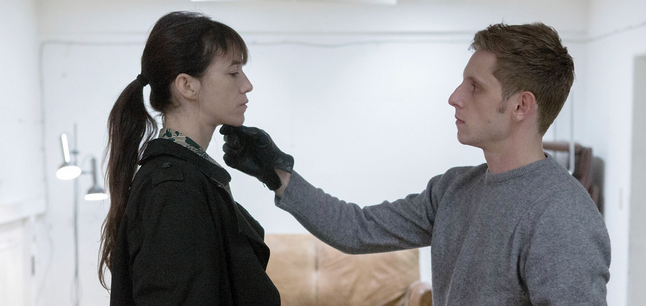
JC: Since you took the time to watch one of my favorite filmmaker's super indulgent movie, I'll talk about one of your favorite filmmaker's super indulgent movie: Lars von Trier's Nymphomaniac. I actually saw both parts on demand at home, not in the theater. I don't know if that makes any difference. I never wrote a legit review, but it did inspire me to write this little think piece about episodic cinema. I guess my feeling is: if you wanna make a TV miniseries, just do it and don't make multiple films and call it cinema. Obviously the main perpetrators of this are the Marvel and other studio films who always feel the need to promise the audience something more, but von Trier could have easily made this one film at a reasonable length. But enough about my own personal feelings on episodic cinema and on to the movie itself. It's definitely interesting. Like your thoughts on Paul Thomas Anderson, I'm not the biggest von Trier fan, but he's one of the few directors I would consider a genius. There's no one in movies I would consider a better provocateur, and he's master that aspect, but Nymphomaniac is an example of one of his movies where there isn't much else there. Nymphomaniac's ultimate thesis about the natural sexism that coms with sexual exploration is brilliant, and only von Trier would tell that kind of tale this way. The way he objectifies all those nameless male characters (thus making the audience confront their discomfort with the male anatomy, while simultaneously confront are disconcerting comfort with female objectification) is unique. But like Boyhood, it's great moments are contrasted with more ponderous ones. The ending is deliciously funny and it shows von Trier at his most #trollsohard, but did we need four hours to get there? Probably not. The world needs movies like Nymphomaniac to reset the calibration, but it's far from one of my favorites of 2014.
VB: I do not entirely disagree. This is hardly the first time von Trier has split up his movies into chapters (he does this with most of his films), but this is definitely the most episodic he has gotten. Each new chapter is often in an entirely new place in time. I don't have any issues with this approach, or with the Marvel movies, though I think that is something completely different. Did it need to be four hours long? DEFINITELY not. But the great ending is soooo much more effective after you've seen hours and hours of erect penises and sex shenanigans, and have wondered what the hell this entire thing is adding up to. And then, of course, by the very very end, you get the super troll the maybe this all just added up to nothing and by adding up to nothing it is something... ? Charlotte Gainsbourg keeps telling Stellan Skarsgaard "I just like sex", despite him always trying to relate her demented sex stories to something like fly-fishing or the fibonacci sequence or Bach (who even does that?! So awesome). I'll leave Nymphomaniac with Uma Thurman's "whoring bed" scene - fucking brilliant.
![]() |
| Jaime Bell sizes up Charlotte Gainsbourg in Nymphomaniac |
VB: I do not entirely disagree. This is hardly the first time von Trier has split up his movies into chapters (he does this with most of his films), but this is definitely the most episodic he has gotten. Each new chapter is often in an entirely new place in time. I don't have any issues with this approach, or with the Marvel movies, though I think that is something completely different. Did it need to be four hours long? DEFINITELY not. But the great ending is soooo much more effective after you've seen hours and hours of erect penises and sex shenanigans, and have wondered what the hell this entire thing is adding up to. And then, of course, by the very very end, you get the super troll the maybe this all just added up to nothing and by adding up to nothing it is something... ? Charlotte Gainsbourg keeps telling Stellan Skarsgaard "I just like sex", despite him always trying to relate her demented sex stories to something like fly-fishing or the fibonacci sequence or Bach (who even does that?! So awesome). I'll leave Nymphomaniac with Uma Thurman's "whoring bed" scene - fucking brilliant.
Tuesday, January 13, 2015
A Conversation With Vincent B. (Part One)
As we did last year, me and my good friend - and Los Angeles resident - Vincent B. had an email back and forth about what we thought about the most talked about movies of 2014. On the heels of the Golden Globes and prior to this Thursday's Oscar nominations announcement, Vincent and I talked about the contenders, the non-contenders and the esoteric loves that we found through out the year. In this first part, we discuss why neither of us could really catch on to "Boyhood fever", why it was quite easy for both of us to love Nightcrawler, and various other movies, including Foxcatcher, Inherent Vice, and Snowpiercer. Here it went:
JC: I guess I should start this off by saying that I never got around to seeing The Babadook, a surprise hit and a film that has a firm placement on your ten best films of the year. Yell at me and tell me about the horrible thing that I've done.
VB: The Babadook is easily the best horror movie that came out this year, and you should definitely see it eventually. That being said, I don't think it would have made your Top Ten (relative sigh of relief). It followed a grieving widow trying to deal with a socially inept terror of a child while trying to get her own life straightened out. A lot of the horror aspects come form the metaphorical visioning of grief in the form of a home-invading monster called the 'Babadook'. I think everything about it is pretty darn great. I could gush about this movie forever, but I'm more intrigued by the fact that neither of us included Boyhood in our Top Tens. All of the critics loved it. What's the matter with us?
JC: I guess I should start this off by saying that I never got around to seeing The Babadook, a surprise hit and a film that has a firm placement on your ten best films of the year. Yell at me and tell me about the horrible thing that I've done.
VB: The Babadook is easily the best horror movie that came out this year, and you should definitely see it eventually. That being said, I don't think it would have made your Top Ten (relative sigh of relief). It followed a grieving widow trying to deal with a socially inept terror of a child while trying to get her own life straightened out. A lot of the horror aspects come form the metaphorical visioning of grief in the form of a home-invading monster called the 'Babadook'. I think everything about it is pretty darn great. I could gush about this movie forever, but I'm more intrigued by the fact that neither of us included Boyhood in our Top Tens. All of the critics loved it. What's the matter with us?
Tuesday, January 6, 2015
The JC Awards
Here are my favorites in a few categories:
Best Director: J.C. Chandor, A Most Violent Year
(Runner-Up: Jonathan Glazer, Under the Skin)
Best Actor: Oscar Isaac, A Most Violent Year
(Runner-Up: Ralph Fiennes, The Grand Budapest Hotel)
Best Actress: Marion Cotillard, Two Days, One Night
(Runner-Up: Reese Witherspoon, Wild)
Best Supporting Actress: Laura Dern, Wild
(Runner-Up: Jessica Chastain, A Most Violent Year)
Best Supporting Actor: Edward Norton, Birdman or (The Unexpected Virtue of Ignorance)
(Runner-Up: Josh Brolin, Inherent Vice)
Best Ensemble: Birdman or (The Unexpected Virtue of Ignorance)
(Runner-Up: Gone Girl)
Best Adapted Screenplay: Paul Thomas Anderson, Inherent Vice
(Runner-Up: Christopher McQuarrie, Jez Butterworth & John-Henry Butterworth, Edge of Tomorrow)
Best Original Screenplay: John Michael McDonagh, Calvary
(Runner-Up: J.C. Chandor, A Most Violent Year)
Best Cinematography: Robert Elswit, Nightcrawler
(Runner-Up: Dick Pope, Mr. Turner)
Best Editing: Tom Cross, Whiplash
(Runner-Up: Martin Pensa & Jean-Marc Vallée, Wild)
Best Art Direction: Adam Stockhausen, The Grand Budapest Hotel
(Runner-Up: David Crank, Inherent Vice)
Best Costume Design: Mark Bridges, Inherent Vice
(Runner-Up: Milena Canonero, The Grand Budapest Hotel)
Best Original Score: Johnny Greenwood, Inherent Vice
(Runner-Up: Mica Levi, Under The Skin)
Best Visual Effects:* Dawn of the Planet of the Apes
(Runner-Up: Interstellar)
*Take this category with a a grain of salt as I don't watch too many films with a great amount of visual effects. But the work in those two films truly did impress me.*
Best Director: J.C. Chandor, A Most Violent Year
(Runner-Up: Jonathan Glazer, Under the Skin)
Best Actor: Oscar Isaac, A Most Violent Year
(Runner-Up: Ralph Fiennes, The Grand Budapest Hotel)
Best Actress: Marion Cotillard, Two Days, One Night
(Runner-Up: Reese Witherspoon, Wild)
Best Supporting Actress: Laura Dern, Wild
(Runner-Up: Jessica Chastain, A Most Violent Year)
Best Supporting Actor: Edward Norton, Birdman or (The Unexpected Virtue of Ignorance)
(Runner-Up: Josh Brolin, Inherent Vice)
Best Ensemble: Birdman or (The Unexpected Virtue of Ignorance)
(Runner-Up: Gone Girl)
Best Adapted Screenplay: Paul Thomas Anderson, Inherent Vice
(Runner-Up: Christopher McQuarrie, Jez Butterworth & John-Henry Butterworth, Edge of Tomorrow)
Best Original Screenplay: John Michael McDonagh, Calvary
(Runner-Up: J.C. Chandor, A Most Violent Year)
Best Cinematography: Robert Elswit, Nightcrawler
(Runner-Up: Dick Pope, Mr. Turner)
Best Editing: Tom Cross, Whiplash
(Runner-Up: Martin Pensa & Jean-Marc Vallée, Wild)
Best Art Direction: Adam Stockhausen, The Grand Budapest Hotel
(Runner-Up: David Crank, Inherent Vice)
Best Costume Design: Mark Bridges, Inherent Vice
(Runner-Up: Milena Canonero, The Grand Budapest Hotel)
Best Original Score: Johnny Greenwood, Inherent Vice
(Runner-Up: Mica Levi, Under The Skin)
Best Visual Effects:* Dawn of the Planet of the Apes
(Runner-Up: Interstellar)
*Take this category with a a grain of salt as I don't watch too many films with a great amount of visual effects. But the work in those two films truly did impress me.*
A Most Violent Year (****)
A MOST VIOLENT YEAR
Written and Directed by J.C. Chandor
****
J.C. Chandor's latest film, his third feature, recalls Francis Ford Coppola's first Godfather film. Cinematographer Bardford Young is doing his best Gordon Willis impression, drowning the characters in the shadows of backdoor dealings and corruption. Both films are lead by a protagonist who sees the edge and always tries to keep away - in a way, both films are about the fight you put up to protect your soul, the effort put up to at least raise the appearance of righteousness. Why distributor A24 Films waited till December 31st to release the film is beyond me. If it had been shown to audiences by mid-November, it would have gotten it's proper due as 2014's most phenomenal cinematic achievement; a movie so expertly made and methodically told, it holds you in its ever-tightening grip until its very end. Films of this quality come so seldom, and yet they often get looked over as I fear A Most Violent Year will be. I wasn't in love with Chandor's first film, Margin Call, a Mamet-esque chat fest about the 2007 financial crisis' effect on several employees in a NYC investment bank, but his 2013 film All is Lost was a brilliant one-man show where Robert Redford and Chandor orchestrated one of the most thrilling meditations on mortality that I've ever seen. A Most Violent Year all but confirms Chandor's placement at the top of the heap amongst new American filmmakers, and shows the kind of masterpiece that the director is capable of.
Written and Directed by J.C. Chandor
****
J.C. Chandor's latest film, his third feature, recalls Francis Ford Coppola's first Godfather film. Cinematographer Bardford Young is doing his best Gordon Willis impression, drowning the characters in the shadows of backdoor dealings and corruption. Both films are lead by a protagonist who sees the edge and always tries to keep away - in a way, both films are about the fight you put up to protect your soul, the effort put up to at least raise the appearance of righteousness. Why distributor A24 Films waited till December 31st to release the film is beyond me. If it had been shown to audiences by mid-November, it would have gotten it's proper due as 2014's most phenomenal cinematic achievement; a movie so expertly made and methodically told, it holds you in its ever-tightening grip until its very end. Films of this quality come so seldom, and yet they often get looked over as I fear A Most Violent Year will be. I wasn't in love with Chandor's first film, Margin Call, a Mamet-esque chat fest about the 2007 financial crisis' effect on several employees in a NYC investment bank, but his 2013 film All is Lost was a brilliant one-man show where Robert Redford and Chandor orchestrated one of the most thrilling meditations on mortality that I've ever seen. A Most Violent Year all but confirms Chandor's placement at the top of the heap amongst new American filmmakers, and shows the kind of masterpiece that the director is capable of.
Sunday, January 4, 2015
Two Days, One Night (***1/2)
TWO DAYS, ONE NIGHT
Deux jours, une nuit
Written and Directed by Jean-Pierre Dardenne and Luc Dardenne
***1/2
Most people discovered Marion Cotillard when she won the Best Actress Oscar for La Vie en Rose in 2008. She was a beautiful, exotic unknown who hyperventilated on the stage and won our hearts. La Vie en Rose was standard fare, she played the role of beloved French singer Edith Piaf with tragic grace, but that performance didn't prepare us for the consistently powerful work she's been producing since. Piaf was a role with theatrical hyperbole, and since she has become a master of subtlety, a perfect star for the small cinema-varité style films she's starred in. Hollywood treats her mostly as a foreign set piece, playing the European girl in the background of films like Inception and Contagion, and yet, she still manages to command the screen and steel what little screen time she has. She's become one of our very best contemporary actresses, and Two Days, One Night is her crescendo. Directed by the Dardenne Brothers, a Belgian duo with a bevy of nifty indies to their credit, Cotillard is shot in handheld intimacy, laid bare and unfiltered. It's as unglamorous a role as one can get for a French beauty like Cotillard, and yet, it doesn't feel like de-glam manipulation - Cotillard brings these people alive time and again, and I don't know if she's ever done a better job than what she does here.
Deux jours, une nuit
Written and Directed by Jean-Pierre Dardenne and Luc Dardenne
***1/2
Most people discovered Marion Cotillard when she won the Best Actress Oscar for La Vie en Rose in 2008. She was a beautiful, exotic unknown who hyperventilated on the stage and won our hearts. La Vie en Rose was standard fare, she played the role of beloved French singer Edith Piaf with tragic grace, but that performance didn't prepare us for the consistently powerful work she's been producing since. Piaf was a role with theatrical hyperbole, and since she has become a master of subtlety, a perfect star for the small cinema-varité style films she's starred in. Hollywood treats her mostly as a foreign set piece, playing the European girl in the background of films like Inception and Contagion, and yet, she still manages to command the screen and steel what little screen time she has. She's become one of our very best contemporary actresses, and Two Days, One Night is her crescendo. Directed by the Dardenne Brothers, a Belgian duo with a bevy of nifty indies to their credit, Cotillard is shot in handheld intimacy, laid bare and unfiltered. It's as unglamorous a role as one can get for a French beauty like Cotillard, and yet, it doesn't feel like de-glam manipulation - Cotillard brings these people alive time and again, and I don't know if she's ever done a better job than what she does here.
Friday, January 2, 2015
Selma (***1/2)
SELMA
Directed by Ava DuVernay
***1/2
The reason why we've never had a truly impactful feature film about Dr. Martin Luther King, Jr. is because it's hard to tell an honest story about a deity. When the man himself is legend, how can the story be? It's a particular issue with American figures, since films are still more or less run through Hollywood and we still get squeamish about showing our favorite sons with the appropriate blemishes. There's this pre-installed belief that we can't do the person justice. The magic of Selma is that not only is it not afraid to show King as a human being - not a holy martyr, but a human being - but it's also unafraid to bring up a harsh truth that Americans may have forgotten: King wasn't the beloved hero in history until he became history; in other words, white America didn't fully accept him until he was assassinated. Selma is Hollywood filmmaking through and through, director Ava DuVernay playing the usual notes that can rally audiences, but it is also a startlingly direct film that attacks American audiences with their own culture. This is the first impactful film about Martin Luther King, a film that shows the man not as a one-person movement but as a single (albeit important) face among many fighting for the simplicity of justice against a systematic racism that's so garish and unsightly that it's hard to believe it was only fifty years ago.
Directed by Ava DuVernay
***1/2
The reason why we've never had a truly impactful feature film about Dr. Martin Luther King, Jr. is because it's hard to tell an honest story about a deity. When the man himself is legend, how can the story be? It's a particular issue with American figures, since films are still more or less run through Hollywood and we still get squeamish about showing our favorite sons with the appropriate blemishes. There's this pre-installed belief that we can't do the person justice. The magic of Selma is that not only is it not afraid to show King as a human being - not a holy martyr, but a human being - but it's also unafraid to bring up a harsh truth that Americans may have forgotten: King wasn't the beloved hero in history until he became history; in other words, white America didn't fully accept him until he was assassinated. Selma is Hollywood filmmaking through and through, director Ava DuVernay playing the usual notes that can rally audiences, but it is also a startlingly direct film that attacks American audiences with their own culture. This is the first impactful film about Martin Luther King, a film that shows the man not as a one-person movement but as a single (albeit important) face among many fighting for the simplicity of justice against a systematic racism that's so garish and unsightly that it's hard to believe it was only fifty years ago.
Subscribe to:
Posts (Atom)


