THE LOBSTER
Directed by Yorgos Lanthimos
****
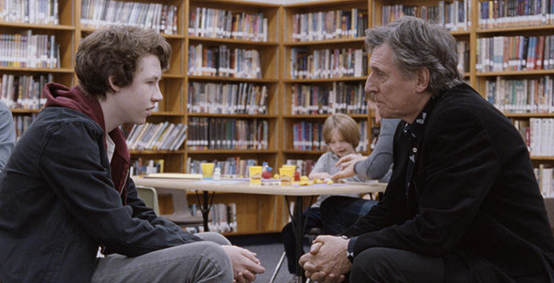
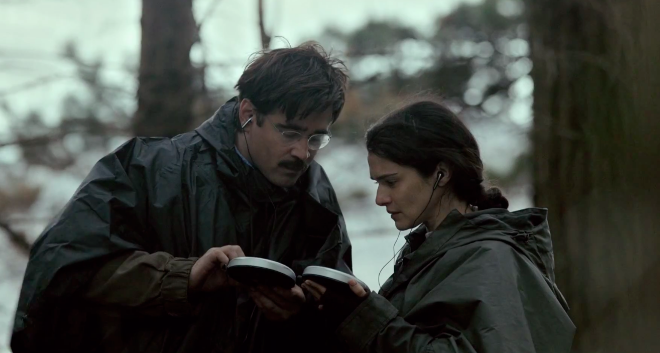
Greek filmmaker Yorgos Lanthimos is one of the most unique storytellers in cinema. His films are tense, funny alternative realities, with sarcastic views of human torment. His 2009 film Dogtooth is one of the most upsetting films that I've ever seen, and it's a testament to Lanthimos and the cast of that film that it still manages to be a brilliant dissection of unnatural human behavior. His latest movie, The Lobster, is his first English-language film, and it stars an international cast of Hollywood actors. Compared to Dogtooth, it has the levity of a Gary Marshall film, but for the many who may be introduced to Lanthimos with The Lobster, they'll get a strikingly funny film, with a number of disturbing moments. It's a marvelous film about the tyranny of love over the human race, the entrapment of society's disdain for lonely people, and the power of passion to overcome daunting odds. The film premiered a year ago at the Cannes Film Festival, and spent 2015 screening internationally at several festivals stacking rave receptions across the globe. Why A24 chose late Spring to unleash this audacious film is unknown. Not that time of year matters, The Lobster is a ingenious movie no matter what the season is. It takes place in a dystopian reality, where only couples are allowed to live in The City, while single people are sent to live in The Hotel. At The Hotel, if these single people are unable to find a mate in forty-five days, they are then transformed into an animal. People have been whittled down into muted, lustless beings who struggle through monotone conversations and live in a constant tension of inferiority. It's not just a stigma to be single, it's a crime.
Sunday, May 15, 2016
Monday, May 9, 2016
A Bigger Splash (**1/2)
A BIGGER SPLASH
Directed by Luca Guadagnino
**1/2
Filmmaker Luca Guadagnino doesn't mind embracing stereotypes of Italian sensuality, embracing themes of sex and passion with a no-holds-barred approach, and casting actors who are sure to be up to the task of stripping down and making that same embrace. His latest film, A Bigger Splash, has such a splendid sense of mischief, a nose for scoping out sex in the innermost center of its characters. At one moment, a character played by Dakota Johnson decries that she is cursed to "fall in love with every beautiful thing", while a character played by Matthias Schoenaerts responds to her that the affliction must be paralyzing. Here are two young beautiful actors in Johnson and Schoenaerts, and Guadagnino shows no apparent shame in filling his frames only with performers who can fill the quota of beauty. This isn't to say that love does not exist in the Italian filmmaker's universes; it does, but it is always undone by illicit longing. His 2009 film, I Am Love, was a masterful portrayal of a woman (played by Tilda Swinton) undone by a lustful act with a younger man. Human beings are always having sex with people they shouldn't, and Guadagnino is fascinated by this phenomenon. A Bigger Splash takes a magnifying glass to the kind of pain and distrust that is born out of the sexual composure of those without barriers. The characters are filled with demons that they refuse to face, instead pooling their emotions in physical embrace, in nudity, in the seductive landscapes of Southern Italy. They walk through vistas with sun-kissed skin, and Guadagnino's camera focuses so completely not only on their beauty but their unadulterated, pulsating inner turmoil. Films about sex are not usually this bare. A Bigger Splash is not shy or modest. It accepts drugs and rock n' roll and that other pesky thing that always completes the trilogy.
Directed by Luca Guadagnino
**1/2
Filmmaker Luca Guadagnino doesn't mind embracing stereotypes of Italian sensuality, embracing themes of sex and passion with a no-holds-barred approach, and casting actors who are sure to be up to the task of stripping down and making that same embrace. His latest film, A Bigger Splash, has such a splendid sense of mischief, a nose for scoping out sex in the innermost center of its characters. At one moment, a character played by Dakota Johnson decries that she is cursed to "fall in love with every beautiful thing", while a character played by Matthias Schoenaerts responds to her that the affliction must be paralyzing. Here are two young beautiful actors in Johnson and Schoenaerts, and Guadagnino shows no apparent shame in filling his frames only with performers who can fill the quota of beauty. This isn't to say that love does not exist in the Italian filmmaker's universes; it does, but it is always undone by illicit longing. His 2009 film, I Am Love, was a masterful portrayal of a woman (played by Tilda Swinton) undone by a lustful act with a younger man. Human beings are always having sex with people they shouldn't, and Guadagnino is fascinated by this phenomenon. A Bigger Splash takes a magnifying glass to the kind of pain and distrust that is born out of the sexual composure of those without barriers. The characters are filled with demons that they refuse to face, instead pooling their emotions in physical embrace, in nudity, in the seductive landscapes of Southern Italy. They walk through vistas with sun-kissed skin, and Guadagnino's camera focuses so completely not only on their beauty but their unadulterated, pulsating inner turmoil. Films about sex are not usually this bare. A Bigger Splash is not shy or modest. It accepts drugs and rock n' roll and that other pesky thing that always completes the trilogy.
Sunday, May 8, 2016
The Meddler (***1/2)
THE MEDDLER
Written and Directed by Lorene Scafaria
***1/2
What a wonderful film The Meddler is. A bittersweet comedy about love, grief and the type of agonizing familial relationships that fill you with guilt and dread. Susan Sarandon stars as Marnie, a Brooklynite widow living in Los Angeles to be close to her daughter, Lori (Rose Byrne). A year after her husband, and Lori's father, has passed, Marnie still struggles to fill the hours of the day. Despite her aimless activity, Marnie is filled with a generous - at times overbearing - spirit, and pools all her attention on Lori, who's going through her own form of grief, trying to recover from a devastating break-up with Jacob (Jason Ritter), a rising actor who left her for a younger woman. Marnie is persistent in her need to help her troubled, unmarried daughter. Lori works as a screenwriter, and her current job on a television pilot adds another layer of stress that isn't helped by Marnie's constant presence. Even when Marnie isn't around she calls incessantly, leaving long, babbling voicemails with detailed tales of her day. Lori cannot handle it, the lack of boundaries forcing her to be stern, even hurtful to her well-meaning mother. For Marnie, all of life seems fine to those around her. She gets along with everyone, including a Apple Store Genius Bar employee named Freddy (Jerrod Carmichael), and one of Lori's close friends Jillian (Cecily Strong). She doesn't find it strange to offer to give rides to Freddy so he can get to night school after work. What does she have to do that she can't help the young man out? She doesn't think twice about offering to pay for Jillian's proper wedding. Her late husband has left her with so much money, why not use it to help others who could use it? As Lori distances herself more and more from her grieving mother, Marnie finds startling ways to fill the void of the family that she's lost.
Written and Directed by Lorene Scafaria
***1/2
What a wonderful film The Meddler is. A bittersweet comedy about love, grief and the type of agonizing familial relationships that fill you with guilt and dread. Susan Sarandon stars as Marnie, a Brooklynite widow living in Los Angeles to be close to her daughter, Lori (Rose Byrne). A year after her husband, and Lori's father, has passed, Marnie still struggles to fill the hours of the day. Despite her aimless activity, Marnie is filled with a generous - at times overbearing - spirit, and pools all her attention on Lori, who's going through her own form of grief, trying to recover from a devastating break-up with Jacob (Jason Ritter), a rising actor who left her for a younger woman. Marnie is persistent in her need to help her troubled, unmarried daughter. Lori works as a screenwriter, and her current job on a television pilot adds another layer of stress that isn't helped by Marnie's constant presence. Even when Marnie isn't around she calls incessantly, leaving long, babbling voicemails with detailed tales of her day. Lori cannot handle it, the lack of boundaries forcing her to be stern, even hurtful to her well-meaning mother. For Marnie, all of life seems fine to those around her. She gets along with everyone, including a Apple Store Genius Bar employee named Freddy (Jerrod Carmichael), and one of Lori's close friends Jillian (Cecily Strong). She doesn't find it strange to offer to give rides to Freddy so he can get to night school after work. What does she have to do that she can't help the young man out? She doesn't think twice about offering to pay for Jillian's proper wedding. Her late husband has left her with so much money, why not use it to help others who could use it? As Lori distances herself more and more from her grieving mother, Marnie finds startling ways to fill the void of the family that she's lost.
Thursday, May 5, 2016
Podcast: Is 'Last Action Hero' Better Than 'Jurassic Park'?
We got a NEW episode of Is It Better Than Jurassic Park?! Gary Burns returns to chat with Scott and I to discuss another one of his childhood favorites, Arnold Schwarzenegger's Last Action Hero. This is definitely one of the most underrated Schwarzenegger films, but is it better than Jurassic Park? Listen and find out!
Friday, April 22, 2016
Green Room (**)
GREEN ROOM
Written and Directed by Jeremy Saulnier
**
If you were lucky enough to see Jeremy Saulnier's Blue Ruin in 2014, then you had the pleasure to catch one of the more captivating thrillers of that year; a film that had a refreshing, direct approach to violence and suspense. His follow-up, Green Room, is a much more standard genre piece, a brooding gore-fest with a much more recognizable cast. In one corner, you have the punk band The Ain't Rights, four broke, pretentious rockers touring the South by the skin of their teeth, siphoning gas from other cars when need be. In the other corner, we have a malicious group of white supremacists who happen to be running and populating the Ain't Rights' latest venue. When their bass player, Pat (Anton Yelchin), witnesses something he shouldn't have, the whole band is held in a terrifying hostage situation in the venue's green room, along with a young punk girl named Amber (Imogen Poots) who is the only one in the room familiar with these radicals' capabilities. Things get more intense when the club's owner - and movement leader - Darcy (Patrick Stewart) arrives and puts into place a complicated plan to eliminate each band member without risking culpability. At Green Room's most sensational, the film works as a chamber drama within the green room, with frantic scheming happening on both sides of the wall. Macon Blair, the star of Blue Ruin, makes an appearance in this film as well, as Gabe a Darcy confidante and worker at the venue, who is unsure of the actions of Darcy and his fellow Neo-Nazis. His moral dilemma is the closest thing the film comes to a heart, and Blair brings the same kind of hangdog sincerity, despite the absurdity of his character. Where Blue Ruin mixed aspects of noir with startling character study, Green Room seems only interested in carnage, and the violence in this film is much more creative and diabolical. It's a slasher film aspiring for the prestige of the Great American Indie. I'm not quite sure it gets there. Despite its simple premise, Saulnier's script is surprisingly dense, but it only makes the story more convoluted than necessary. Supporting performances from Alia Shawkat, Kai Lennox and Joe Cole are strong, but there isn't a whole lot a wit here. Just an extended sequence of extreme violence that adds up to little but cheap thrills, but Saulnier's version of cheap is still an interesting thing to watch.
Written and Directed by Jeremy Saulnier
**
If you were lucky enough to see Jeremy Saulnier's Blue Ruin in 2014, then you had the pleasure to catch one of the more captivating thrillers of that year; a film that had a refreshing, direct approach to violence and suspense. His follow-up, Green Room, is a much more standard genre piece, a brooding gore-fest with a much more recognizable cast. In one corner, you have the punk band The Ain't Rights, four broke, pretentious rockers touring the South by the skin of their teeth, siphoning gas from other cars when need be. In the other corner, we have a malicious group of white supremacists who happen to be running and populating the Ain't Rights' latest venue. When their bass player, Pat (Anton Yelchin), witnesses something he shouldn't have, the whole band is held in a terrifying hostage situation in the venue's green room, along with a young punk girl named Amber (Imogen Poots) who is the only one in the room familiar with these radicals' capabilities. Things get more intense when the club's owner - and movement leader - Darcy (Patrick Stewart) arrives and puts into place a complicated plan to eliminate each band member without risking culpability. At Green Room's most sensational, the film works as a chamber drama within the green room, with frantic scheming happening on both sides of the wall. Macon Blair, the star of Blue Ruin, makes an appearance in this film as well, as Gabe a Darcy confidante and worker at the venue, who is unsure of the actions of Darcy and his fellow Neo-Nazis. His moral dilemma is the closest thing the film comes to a heart, and Blair brings the same kind of hangdog sincerity, despite the absurdity of his character. Where Blue Ruin mixed aspects of noir with startling character study, Green Room seems only interested in carnage, and the violence in this film is much more creative and diabolical. It's a slasher film aspiring for the prestige of the Great American Indie. I'm not quite sure it gets there. Despite its simple premise, Saulnier's script is surprisingly dense, but it only makes the story more convoluted than necessary. Supporting performances from Alia Shawkat, Kai Lennox and Joe Cole are strong, but there isn't a whole lot a wit here. Just an extended sequence of extreme violence that adds up to little but cheap thrills, but Saulnier's version of cheap is still an interesting thing to watch.
Tuesday, April 12, 2016
Louder Than Bombs (***1/2)
LOUDER THAN BOMBS
Directed by Joachim Trier
***1/2
Norwegian filmmaker Joachim Trier has already shown that he's an unmatched talent in film right now. His third feature, Louder Than Bombs, is his first one in English. A plot description might suggest a limp novel adaptation, a maudlin tale of tragedy befallen by manipulated emotions - a much too common occurrence when great foreign directors try their hand at American stories. Instead, what we get is the kind of devastatingly effective familial melodrama that too many American filmmakers fail to make these days. It's stark, melancholy attitude is backed up by heartbreaking performances and a script that has a novelist's eye for details. Like his first two magnificent films, Reprise and Oslo, August 31st, the story's focus is minute, but its themes are expansive in a way that reflects the sadness of the human condition while maintaining that balance of honesty and romanticism that makes his films so wonderful. Transitioning from Norwegian to English (and from Oslo to New York), doesn't defang Trier; he still dwells in meditations of depression and loneliness, and Louder Than Bombs has a touching fondness for its characters' grief. In all three of his features, Trier explores sadness as an influential, sometimes even exhilarating experience. Creative people are undone by their inner turmoil, and Trier creates these universes where creation and tragedy work together in a cyclical enterprise that produces the beauty that humans depend on. That he's able to make these films while avoiding the cynical bleakness of his fellow Scandinavian filmmakers (like the infamous Lars von Trier and Thomas Vinterberg) sets him apart. There is a value to humanity, but it doesn't mean we're all happy about it.
Directed by Joachim Trier
***1/2
Norwegian filmmaker Joachim Trier has already shown that he's an unmatched talent in film right now. His third feature, Louder Than Bombs, is his first one in English. A plot description might suggest a limp novel adaptation, a maudlin tale of tragedy befallen by manipulated emotions - a much too common occurrence when great foreign directors try their hand at American stories. Instead, what we get is the kind of devastatingly effective familial melodrama that too many American filmmakers fail to make these days. It's stark, melancholy attitude is backed up by heartbreaking performances and a script that has a novelist's eye for details. Like his first two magnificent films, Reprise and Oslo, August 31st, the story's focus is minute, but its themes are expansive in a way that reflects the sadness of the human condition while maintaining that balance of honesty and romanticism that makes his films so wonderful. Transitioning from Norwegian to English (and from Oslo to New York), doesn't defang Trier; he still dwells in meditations of depression and loneliness, and Louder Than Bombs has a touching fondness for its characters' grief. In all three of his features, Trier explores sadness as an influential, sometimes even exhilarating experience. Creative people are undone by their inner turmoil, and Trier creates these universes where creation and tragedy work together in a cyclical enterprise that produces the beauty that humans depend on. That he's able to make these films while avoiding the cynical bleakness of his fellow Scandinavian filmmakers (like the infamous Lars von Trier and Thomas Vinterberg) sets him apart. There is a value to humanity, but it doesn't mean we're all happy about it.
Monday, April 11, 2016
Demolition (**)
Demolition
Directed by Jean-Marc Vallée
**
After Dallas Buyers Club and Wild, director Jean-Marc Vallée completes his trilogy of lost souls with his latest film, Demolition. Much like Wild, the film is a histrionic meditation on grief through the point-of-view of someone who mourns self-destructively. Vallée is working with Jake Gyllenhaal here, and for a filmmaker who seems to adore visceral visualization of emotion, Gyllenhaal seems like a perfect match. The 35-year-old actor has spent the last few years abandoning the concept of himself as a heartthrob, and revealing himself to be an incredibly immersive character actor. His performance here is strong, playing an exorbitantly wealthy finance man who's never worked hard for anything in his life who suddenly finds himself saddled with an array of unfamiliar feelings after the sudden, tragic death of his wife. Some may remember Gyllenhaal also starring in the 2002 film Moonlight Mile which pretty much had the same premise (in that film, it was a fiance that died). That film was sentimental - and was one of those early 00's indies that felt more like the director's Spotify playlist than a complete film. It took the usual course of action where these kinds of stories are concerned, containing a kind of mushy, heartfelt-ness that was a bit too sweet for the few who actually saw it. Both films concerned an ambivalent love upended by tragedy, but Demolition does not mince words about the behavior of its protagonist. It's hard to think of a more unlikeable character in which the audience is asked to expel so much empathy for.
Directed by Jean-Marc Vallée
**
After Dallas Buyers Club and Wild, director Jean-Marc Vallée completes his trilogy of lost souls with his latest film, Demolition. Much like Wild, the film is a histrionic meditation on grief through the point-of-view of someone who mourns self-destructively. Vallée is working with Jake Gyllenhaal here, and for a filmmaker who seems to adore visceral visualization of emotion, Gyllenhaal seems like a perfect match. The 35-year-old actor has spent the last few years abandoning the concept of himself as a heartthrob, and revealing himself to be an incredibly immersive character actor. His performance here is strong, playing an exorbitantly wealthy finance man who's never worked hard for anything in his life who suddenly finds himself saddled with an array of unfamiliar feelings after the sudden, tragic death of his wife. Some may remember Gyllenhaal also starring in the 2002 film Moonlight Mile which pretty much had the same premise (in that film, it was a fiance that died). That film was sentimental - and was one of those early 00's indies that felt more like the director's Spotify playlist than a complete film. It took the usual course of action where these kinds of stories are concerned, containing a kind of mushy, heartfelt-ness that was a bit too sweet for the few who actually saw it. Both films concerned an ambivalent love upended by tragedy, but Demolition does not mince words about the behavior of its protagonist. It's hard to think of a more unlikeable character in which the audience is asked to expel so much empathy for.
Podcast: Is 'Chicago' Better Than Jurassic Park?
New podcast episode! We're talking about Chicago with Bill Magee. Our first musical. Is it better than Jurassic Park? Listen and find out. It's gotta happen sometime.
Monday, April 4, 2016
Krisha (****)
KRISHA
Written and Directed by Trey Edward Shults
****
When's the last time an American filmmaker had as strong a debut film as Trey Edward Shults' Krisha? The movie is so confident, so breathtakingly beautiful, so vulnerable with its feelings and situations. Shults made the film with the help of family and friends (and a successful Kickstarter campaign) but this does not have the dollar-bill indie-ness of a Duplass brothers movie. No, Shults is actually audacious enough to make Krisha as cinematic as possible. The film is a chamber drama about family, addiction, regret and redemption; its pain is palpable and scathing. It's a tight but fluid hurricane of a film. The allusions to other filmmakers are there - amongst others, Paul Thomas Anderson and Ingmar Bergman are very present - and yet, Shults still manages to make this film so very much his own. Based on his one film, we can say that a great director has arrived, one who understands both the importance of strong narrative and visual composition. Starring mostly his friends and relatives (nearly all of the characters share the names of the actors who play them), Shults is fascinatingly blurring the lines between fiction and docudrama - the seeds of familial strife being exorcised by cinema. Crafting this steaming of a drama is difficult, and only works if the pain is acutely felt. The strain that family puts on you is real, and Krisha puts that strain on full display.
Written and Directed by Trey Edward Shults
****
When's the last time an American filmmaker had as strong a debut film as Trey Edward Shults' Krisha? The movie is so confident, so breathtakingly beautiful, so vulnerable with its feelings and situations. Shults made the film with the help of family and friends (and a successful Kickstarter campaign) but this does not have the dollar-bill indie-ness of a Duplass brothers movie. No, Shults is actually audacious enough to make Krisha as cinematic as possible. The film is a chamber drama about family, addiction, regret and redemption; its pain is palpable and scathing. It's a tight but fluid hurricane of a film. The allusions to other filmmakers are there - amongst others, Paul Thomas Anderson and Ingmar Bergman are very present - and yet, Shults still manages to make this film so very much his own. Based on his one film, we can say that a great director has arrived, one who understands both the importance of strong narrative and visual composition. Starring mostly his friends and relatives (nearly all of the characters share the names of the actors who play them), Shults is fascinatingly blurring the lines between fiction and docudrama - the seeds of familial strife being exorcised by cinema. Crafting this steaming of a drama is difficult, and only works if the pain is acutely felt. The strain that family puts on you is real, and Krisha puts that strain on full display.
Sunday, April 3, 2016
Podcast: Is 'The Terminal' Better Than Jurassic Park?
In the latest episode of Is It Better Than Jurassic Park? we get a visit from two drunken April fools, David Danby and Omar (ne Borney, neé Scott Volz), who sit down to decide if Steven Spielberg's The Terminal is better than Jurassic Park. The conversation quickly downturns into 9/11 conspiracies, how to pronounce the word "jaguar" and a handful of unkind things are said about Richard Gere. It's our most unlistenable episode yet.
Monday, March 28, 2016
Midnight Special (***)
MIDNIGHT SPECIAL
Written and Directed by Jeff Nichols
***
Midnight Special is Jeff Nichols' fourth feature. To this point, all of his films are deconstructions of the American South; part commentary, part appreciation. He dissects the region's virtues and prejudices, its insanities and its mythologies. They also all star Michael Shannon. They have these things in common, but still have their own pulsating independence from one another. Take Shelter is a shattering tale about a man's mental disintegration, a psychological thriller with biblical allusions and an alarming sense of empathy uncommon in that kind of story. Mud was a film shoved together in the public mind as part of 2013's McConnaissance, but it was actually a stunning Southern Gothic with an achingly sweet center - it managed to recall both Harper Lee and Flannery O'Connor. Midnight Special is his most confounding film yet, and its his first venture into science fiction. Once again, Michael Shannon is on board. Shannon is such a strong screen presence - his ability to translate pain and torment with such effortlessness is matched by only few others in Hollywood. His fragmented film persona works perfectly with Nichols' tales of misplacement, of the South's perpetual discomfort with a rapidly modernizing world. Born in Arkansas, Nichols' has a warmth for this place and these people, and it shows in his films. He understands their behaviors and superstitions, and his ability to mold them into these wonderfully unique films is what makes him one of the most fascinating young filmmakers out there. Midnight Special tackles some familiar themes: religion, displacement, a creeping fear of outside threats and basic otherness. Nichols is experimenting with more complicated plot elements here, but at its heart, Midnight Special's story is simple. How far will a father go to protect his child?
Written and Directed by Jeff Nichols
***
Midnight Special is Jeff Nichols' fourth feature. To this point, all of his films are deconstructions of the American South; part commentary, part appreciation. He dissects the region's virtues and prejudices, its insanities and its mythologies. They also all star Michael Shannon. They have these things in common, but still have their own pulsating independence from one another. Take Shelter is a shattering tale about a man's mental disintegration, a psychological thriller with biblical allusions and an alarming sense of empathy uncommon in that kind of story. Mud was a film shoved together in the public mind as part of 2013's McConnaissance, but it was actually a stunning Southern Gothic with an achingly sweet center - it managed to recall both Harper Lee and Flannery O'Connor. Midnight Special is his most confounding film yet, and its his first venture into science fiction. Once again, Michael Shannon is on board. Shannon is such a strong screen presence - his ability to translate pain and torment with such effortlessness is matched by only few others in Hollywood. His fragmented film persona works perfectly with Nichols' tales of misplacement, of the South's perpetual discomfort with a rapidly modernizing world. Born in Arkansas, Nichols' has a warmth for this place and these people, and it shows in his films. He understands their behaviors and superstitions, and his ability to mold them into these wonderfully unique films is what makes him one of the most fascinating young filmmakers out there. Midnight Special tackles some familiar themes: religion, displacement, a creeping fear of outside threats and basic otherness. Nichols is experimenting with more complicated plot elements here, but at its heart, Midnight Special's story is simple. How far will a father go to protect his child?
Monday, March 21, 2016
Hello, My Name is Doris (***)
HELLO, MY NAME IS DORIS
Directed by Michael Showalter
***
What a wonderfully sweet snack of a movie Hello, My Name is Doris turned out to be. Michael Showalter, of Wet Hot American Summer fame, gets behind the camera and directs only his second feature film, but gone is the absurdity of Summer and his cult television shows The State and Stella, and in its place is a wonderfully sincere and poignant tale of a spunky but troubled sexagenarian realizing that she can take control of her life for the first time. Her name is Doris Miller and she's played with pitch-perfect comedic timing by Sally Field. Doris is a long-time accountant at a quickly-modernizing New York City corporation; a union dinosaur quickly becoming surrounded by younger and younger co-workers. Doris' whole life was taking care of her unwell mother, but when her mother passes, she's left with a house cluttered with hoarded belongings and decades-old food. Her brother, Todd (Stephen Root), and his maddening wife (Wendi McLendon-Covey) want her to address her hoarding problem, clean up the home, and get it ready for sale so that way Todd can get his half of the inheritance. Doris cannot seem to keep her mind on her brother's request, though, because she has become fixated on her company's new hire, a California-transport named John Fremont (Max Greenfield) whose boyish handsomeness and all-around niceties makes him the immediate focus of Doris' complete infatuation. Doris' best friend, Roz (Tyne Daly), finds Doris' obsession with the decades-younger John unbecoming, but with the help of Roz's thirteen-year-old granddaughter, Vivian (Isabella Acres), Doris creates a fake Facebook account and friends John, allowing herself to keep tabs on all of John's likes, dislikes, passions and hatreds. She uses the fake account to reinvent herself as sixty-something year-old millennial, and finagling herself into becoming one of John's better friends in the office. But will she be able to win his heart?
Directed by Michael Showalter
***
What a wonderfully sweet snack of a movie Hello, My Name is Doris turned out to be. Michael Showalter, of Wet Hot American Summer fame, gets behind the camera and directs only his second feature film, but gone is the absurdity of Summer and his cult television shows The State and Stella, and in its place is a wonderfully sincere and poignant tale of a spunky but troubled sexagenarian realizing that she can take control of her life for the first time. Her name is Doris Miller and she's played with pitch-perfect comedic timing by Sally Field. Doris is a long-time accountant at a quickly-modernizing New York City corporation; a union dinosaur quickly becoming surrounded by younger and younger co-workers. Doris' whole life was taking care of her unwell mother, but when her mother passes, she's left with a house cluttered with hoarded belongings and decades-old food. Her brother, Todd (Stephen Root), and his maddening wife (Wendi McLendon-Covey) want her to address her hoarding problem, clean up the home, and get it ready for sale so that way Todd can get his half of the inheritance. Doris cannot seem to keep her mind on her brother's request, though, because she has become fixated on her company's new hire, a California-transport named John Fremont (Max Greenfield) whose boyish handsomeness and all-around niceties makes him the immediate focus of Doris' complete infatuation. Doris' best friend, Roz (Tyne Daly), finds Doris' obsession with the decades-younger John unbecoming, but with the help of Roz's thirteen-year-old granddaughter, Vivian (Isabella Acres), Doris creates a fake Facebook account and friends John, allowing herself to keep tabs on all of John's likes, dislikes, passions and hatreds. She uses the fake account to reinvent herself as sixty-something year-old millennial, and finagling herself into becoming one of John's better friends in the office. But will she be able to win his heart?
Monday, March 14, 2016
Knight of Cups (**1/2)
KNIGHT OF CUPS
Written and Directed by Terrence Malick
**1/2
There's so much to like in Knight of Cups. It's got a great assortment of beautiful actors, caught up in another swirling cinematic ballet from Terrence Malick. Since his fifth film, The Tree of Life (a film meant to be his magnum opus and it rises to that expectation), Malick has gravitated more and more toward the abstract. 2013's To The Wonder was a sweet, melancholy companion piece with a much more reduced viewpoint and a surprisingly tender portrait of the whims of romance - it's also one of the few times that Malick crafted a female character (Olga Kurylenko's Marina) that wasn't simply a male fantasy of love and virility. If we're making Knight of Cups the third part of an unofficial trilogy, it fits in aesthetically, but not so much emotionally. It's an angrier film, much more subjective, a film that sees less grace in life. It's not a satire of Los Angeles, but it's certainly a commentary. It sees life in the film business as not really life at all, but a prolonged dream sequence fueled by excess in drugs, sex, power. This is the third collaboration between Malick and legendary cinematographer Emmanuel Lubezki. These two artists have such a wonderful visual fusion together. Lubezki has made many films by many filmmakers look incredible, but its his work with Malick that really sticks out. Malick isn't interested in making Lubezki do endurance tests the way Cuarón and Iñárritu are, but instead taps into the Mexican cameraman's ability to craft blissful, fluid shots of human interaction. Knight of Cups is far from either Malick's or Lubezki's best work, but it's another example of their mastery of cinematic lyricism. Too bad the same can't be said of Malick's handle of narrative.
Written and Directed by Terrence Malick
**1/2
There's so much to like in Knight of Cups. It's got a great assortment of beautiful actors, caught up in another swirling cinematic ballet from Terrence Malick. Since his fifth film, The Tree of Life (a film meant to be his magnum opus and it rises to that expectation), Malick has gravitated more and more toward the abstract. 2013's To The Wonder was a sweet, melancholy companion piece with a much more reduced viewpoint and a surprisingly tender portrait of the whims of romance - it's also one of the few times that Malick crafted a female character (Olga Kurylenko's Marina) that wasn't simply a male fantasy of love and virility. If we're making Knight of Cups the third part of an unofficial trilogy, it fits in aesthetically, but not so much emotionally. It's an angrier film, much more subjective, a film that sees less grace in life. It's not a satire of Los Angeles, but it's certainly a commentary. It sees life in the film business as not really life at all, but a prolonged dream sequence fueled by excess in drugs, sex, power. This is the third collaboration between Malick and legendary cinematographer Emmanuel Lubezki. These two artists have such a wonderful visual fusion together. Lubezki has made many films by many filmmakers look incredible, but its his work with Malick that really sticks out. Malick isn't interested in making Lubezki do endurance tests the way Cuarón and Iñárritu are, but instead taps into the Mexican cameraman's ability to craft blissful, fluid shots of human interaction. Knight of Cups is far from either Malick's or Lubezki's best work, but it's another example of their mastery of cinematic lyricism. Too bad the same can't be said of Malick's handle of narrative.
Sunday, March 13, 2016
Podcast: Is 'Deadpool' Better Than Jurassic Park?
Hey guys, the latest episode of 'Is It Better Than Jurassic Park?' is up and we're talking about Deadpool with the Deadpool super-fan Conner Kennedy. As usual, there are definitely tangents, but not enough to derail the ultimate question: Is it better than JP?
Thursday, March 10, 2016
Zootopia (***1/2)
ZOOTOPIA
Directed by Byron Howard, Rich Moore and Jared Bush
Calling Zootopia a film for children is not inaccurate, but it skips a very important piece of information: the substance in this film's screenplay (written by co-director Jared Bush and Phil Johnston) is made for the adult audience. Everything from the thinly-veiled metaphors to the pop culture references will resinate stronger with the parents then they ever will with the kids. And yet, Zootopia totally works in both capacities. I can only think of one other instance in which such a perfect balance was achieved, and that was Pixar's The Incredibles in 2004. I'd claim that both of these films are actually films for adults wrapped in the kind of cutesy packaging that gets the kiddies into the theater. The Incredibles was a brilliant, stirring film about the dynamics of marriage and the truly American problem of handling your own heroism. Zootopia's view is a bit broader, less piercing in its dissection, more willing to play to the illusion of being a film constructed for children. It is so much more, though. The humanistic virtues that it espouses are not original and yet we find ourselves in a place where its themes of tolerance and multiculturalism are much needed for the whole country, if not just the younger ones.
Directed by Byron Howard, Rich Moore and Jared Bush
Calling Zootopia a film for children is not inaccurate, but it skips a very important piece of information: the substance in this film's screenplay (written by co-director Jared Bush and Phil Johnston) is made for the adult audience. Everything from the thinly-veiled metaphors to the pop culture references will resinate stronger with the parents then they ever will with the kids. And yet, Zootopia totally works in both capacities. I can only think of one other instance in which such a perfect balance was achieved, and that was Pixar's The Incredibles in 2004. I'd claim that both of these films are actually films for adults wrapped in the kind of cutesy packaging that gets the kiddies into the theater. The Incredibles was a brilliant, stirring film about the dynamics of marriage and the truly American problem of handling your own heroism. Zootopia's view is a bit broader, less piercing in its dissection, more willing to play to the illusion of being a film constructed for children. It is so much more, though. The humanistic virtues that it espouses are not original and yet we find ourselves in a place where its themes of tolerance and multiculturalism are much needed for the whole country, if not just the younger ones.
Subscribe to:
Posts (Atom)