Monday, October 26, 2015

Suffragette (**)

SUFFRAGETTE
Directed by Sarah Gavron

**

Suffragette is a purposefully-directed film with good intentions. It gets a performance out of Carey Mulligan that proves that she is one of the best young actors working right now. In a time where the reproductive rights of women are still being decided by a mostly-male government, its story - of a rebellious group of working class women fighting for the right to vote in late 19th Century London - is still palpably topical. And yet, the film feels entirely too low stakes, even it's most emotionally-charged scenes feel telegraphed to the audience. It seems to lack nuance. When well-meaning mother and wife Maud Watts (Mulligan) sees firsthand the effect of the Suffrage movement, she decides to join a local group of women called the Suffragettes, performing acts of civil disobedience, stirring the pot under the guidance of their leader, Emmeline Pankhurst (Meryl Streep, in a glorified cameo). This group includes Edith Ellyn (Helena Bonham-Carter), a local doctor with a strong loyalty to Pankhurst, Violet Miller (Anne-Marie Duff), a rabble-rousing launderette in an abusive marriage, and Emily Davison (Natalie Press) a soft-spoken protestor with a lot more in store than it may initially seem. They face the violent punishment from the police, as well as an Irish detective named Steed (a solid Brendan Gleeson) brought in especially to squash the movement. Despite constant arrests and police beatings, as well as the alienation of their husbands, the Suffragettes continue to blow up postal boxes and throw rocks through store windows, sure to be heard. Aside from Parkhurst, the Suffragettes here are all fictional, and perhaps that explains why the film lacks an emotional weight. Despite the solid work Mulligan does here, Suffragette doesn't feel like the kind of watershed film that it thinks it is. Director Sarah Gavron shoots with a lot of handheld, meant to give the story an immediacy, but it too often distracts. Some of the scenes are strong, almost all of them are lead by the performances, but this film feels flat, more steadfast than effective.

Sunday, October 25, 2015

Truth (**1/2)

TRUTH
Written for the Screen and Directed by James Vanderbilt

**1/2

Truth is based on the memoir of Mary Mapes, the CBS news reporter and 60 Minutes producer fired after the Dan Rather scandal. Whatever objectivity James Vanderbilt reflects upon Mapes and her journalistic integrity, Vanderbilt does not hold himself to the same standard of objectivity - the film is completely and unapologetically sympathetic with the disgraced newswoman. Even to the extent that the film admits Mapes made mistakes when she ran with a story disputing then President George W. Bush's military record, it does so while stating that any and all groundbreaking reporting is done with a degree of faith - you can never be 100% sure, you just have to trust your sources. Furthermore, Vanderbilt's film makes Mapes a psychological construct, a character pieced together by a stiff upper lip and daddy issues. She's not great at her job because of her skill, but because she had to fight, and because Dan Rather was there to be the father she deserved. Luckily, Truth cast Cate Blanchett in the role of Mapes, and I'll be damned if she doesn't perform the hell out of this role. The Australian actress is approaching peerlessness, performing at such a high level here, with such pinpoint certainty, such perfect delivery, it's hard to imagine anyone else being able to take this material and churning out this level of work. Truth has a very moral, humanistic view on the network news, and it sees the Dan Rather scandal as the moment everything turned against them, but it's best moments come when we're allowed to see Blanchett smolder along, fraying with growing frequency as the noose tightens around Mapes' neck.

Saturday, October 24, 2015

Crimson Peak (**)

CRIMSON PEAK
Directed by Guillermo del Toro

**

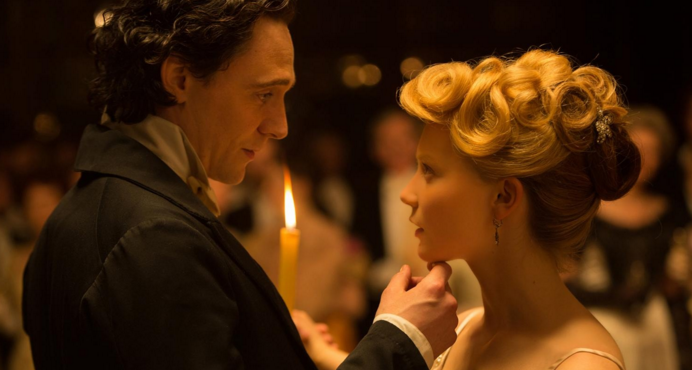
Guillermo del Toro sure knows how to make a movie look good. The main set of Crimson Peak is a crumbling mansion in rural England built upon a vast landscape seeping with red clay. It's seeping so much that the decrepit building is actually sinking into it. The inside of the place is creaky, a lot of pipes rusted black, a hole in the ceiling where snow falls neatly in a pristine pile in the middle of the entrance floor. The whole scene is delectable - it's meant to come off as unsettling, it instead seems sugary and enticing. Del Toro can't help but make it pretty, but this film doesn't match the frivolity of Pacific Rim and Hellboy, it's story is more tender. The Mexican director often deals with stories so brutal and grotesque, and tends to excel within grand set pieces and wondrous costumes. Pan's Labyrinth is his masterpiece, a film that so perfectly translates his career long obsession with blending the blessed fantasy of imagination with the true horrors of real life. Crimson Peak, is about the same thing, but it is also rooted in the gothic romances of the nineteenth century, filled with monsters both human and inhuman. Sticking this in theaters a few weeks before Halloween seems like an obvious choice, until you realize that del Toro's creepy thrills are not the cheap kind that comes with most horror films these days. His taste is bloody, malicious and the philosophies of his scripts are untrusting of the human spirit. Watching this film feels almost autobiographical, because what other conclusions can one draw about humanity when you see what the characters of Crimson Peak are capable of?

Tuesday, October 20, 2015

Room (****)

ROOM
Directed by Lenny Abrahamson

****

When Room surprised many by winning the Audience Award at the Toronto Film Festival - besting what many saw as the easy favorite, Tom McCarthy's Spotlight - it was confirmed that it was more than just your garden variety best-seller adaptation. The film is based on a novel by Emma Donoghue, and she also wrote the screenplay. There was a time when novelists were usually considered the worst candidates to adapt their own work, but after Stephen Chbosky's film take on his Perks of Being a Wallflower in 2012, last year's Gone Girl and now this year's Room, that line of thinking should change. Donoghue's script and Lenny Abrahamson's direction of it is an emotionally devastating experience, a tale of the fragility of the human spirit. At times glaring, and at other times sweet, the film watches over a vast landscape of human experience and serves it all to you within a deceptively simple tale of tragedy and survival. The film is led by a couple of powerhouse performances, one from Brie Larson and the other from the fresh-faced Jacob Tremblay, a nine-year-old who's playing even younger. Their mother-son relationship is the crux of the film's narrative, and the key to what makes Room work so well. Their performances are phenomenal, and set the stage for what Donoghue and Abrahamson are bringing to the table: a shattering maternal tale about grasping for salvation in a desperate situation.

Sunday, October 18, 2015

Bridge of Spies (**1/2)

BRIDGE OF SPIES
Directed by Steven Spielberg

**1/2

Steven Spielberg has been living in the past for quite a while now. Not since War of the Worlds has he made a film taking place in something resembling contemporary times, and in that film he destroyed the world. Of course, both Munich in 2005 and his previous film, Lincoln in 2012, were pieces of historical narrative drenched in metaphor for the issues of the present. Munich could have been decoded as a strong criticism of the US's occupation of Iraq, and Lincoln simply IS a salute to Obama America, even if Spielberg continues to insist that it isn't so. His Bridge of Spies is a strong piece of filmmaking, a testament to just how good a director Spielberg can be, despite how intriguing or not intriguing his story is. Of course, this story is intriguing, an in-depth drama exploring the most talked about American war that never happened. The Cold War was a decades-long staredown consisting of paranoia seeping from both sides, as two world powers used not-so-veiled threats of complete world destruction to see who would blink first. It birthed so many agencies and counter-agencies, and yet, the movies have never seemed to have much interest in dramatizing it. The way Spielberg goes about it here is interesting, he doesn't see himself as duty-bound to do everything he can to paint America as the benevolent protector, nor does he coyly play the Soviets as sadistic monsters. Instead, he's neutral, the film itself is procedural. If Joe McCarthy had seen this screenplay during his reign of power who knows what he would have made of it.

Tuesday, October 13, 2015

Steve Jobs (***1/2)

STEVE JOBS
Directed by Danny Boyle

***1/2

It's hard to conjure initial thoughts of Steve Jobs because it's so rare to watch a film in which its plainly obvious just how un-fucked-with the screenplay is. If it wasn't obvious just how much Aaron Sorkin owed to Paddy Chayefsky, then it becomes so after seeing Jobs. No non-directing screenwriter has ever been so fully responsible for the final cut since Chayefsky's groundbreaking Network in 1976. Not that Jobs is the same kind of groundbreaking cinematic achievement that Network is, but both films present elemental theses about their writers that go on to define what they, better or worse, represent. Now, Steve Jobs is actually Sorkin's second vision of Silicon Valley after 2010's The Social Network which was an equally unflattering portrait of a computer tyrant, Mark Zuckerberg. If The Social Network painted Zuckerberg as almost autistically dismissive of humanity, Sorkin now sees Jobs as a sociopathic monster - neither men come off as particularly influential, as they do detrimental. If the history of the world is a collection of tales involving powerful white men bullying there way to the front of the stage, Sorkin feels Steve Jobs should be singled out for his megalomania. Sorkin gets away with this because the characters in his films aren't really people, but ideas. Steve Jobs isn't really about Steve Jobs in the same way The Social Network isn't really about Zuckerberg, because even if they are in fact based on real people, they're actually Freudian constructs of what Sorkin sees as the tragedy of the pursuit of the American ideal. There is always a risk of Sorkin becoming heavy-handed (**cough** The Newsroom), but Steve Jobs is Sorkin at his best, an American moralist with an unmatched gift for dialogue and whose scene construction is above what anyone else can bring to the table.

Tuesday, October 6, 2015

The Martian (***)

THE MARTIAN
Directed by Ridley Scott

***

A story of space survival should not be as airy and fleeting as The Martian is. 2001: A Space Odyssey set the standard, and Gravity perfected it. Outer space is an unkind, asphyxiating experience; out of the control of your meticulously designed mission, your life is literally up in the air. Andy Weir's novel was fantastic popcorn fiction which nonetheless managed to pile on heavy amounts of information and wax intellectual on the myriad of complexities involved in space exploration. His novel was also funny, thrilling and a surprisingly noble statement on humanity. It's probably a more complimentary story than the human race deserves. But if there was any story that could bring a lightness to the usually tempestuous sub-genre of space peril, this book is it. Drew Goddard's adaptation and Ridley Scott's direction of it really bring to light the adventure that Weir put forth, a long-shot rescue mission for a man deserted on a lifeless planet. The Martian is charming in its way, making a considered effort to avoid self-seriousness - the only thing that it truly takes seriously is the brutality of space - and the result is a pre-Fall delight, a movie that takes on the personality of its star, Matt Damon, while also being a surprisingly effective argument for the concept of cooperation and a collective conscience.

Monday, October 5, 2015

Labyrinth of Lies (***1/2)

LABYRINTH OF LIES
Directed by Giulio Ricciarelli

***1/2

You could spend a lifetime watching films dealing with World War II, the Holocaust and the ripple effects it has had on Europe, America and nearly all advanced nations in the world. You could spend a lifetime watching these films and still not see them all. The war is so readily perfect for films because the lines of good and evil are drawn very specifically - by all accounts, it's perceived as a war in which the good guys won. Despite the amount of films, there's very few that show nuance, that are willing to blur our memories of the heroic allies versus the depraved Nazis. Labyrinth of Lies takes place in the 1960's Frankfurt, decades after the worst was over. Germany is still struggling to regain its place in the world, and the last thing any of the old guard wants is someone to bring up the fact that there is indeed more for them to pay for. That a German film is being made about German comeuppance during the war is astonishing in its own right, but Labyrinth of Lies' cool detachment, its declarative feelings about post-war Germany are its most powerful asset. Directed by Italian filmmaker Giulio Ricciarelli - his feature debut - this film's strong presence makes it one of the fresher films to deal with this subject matter. Lies documents a nation in turmoil, a mass of people trying so hard to convince themselves that everything is fine that they can't see the insidious nature of what's in front of them.

Monday, September 28, 2015

Mississippi Grind (***1/2)

MISSISSIPPI GRIND
Written and Directed by Anna Boden and Ryan Fleck

**1/2

There's an inherent dichotomy in most gambling movies in the vain of Mississippi Grind. They usually are very fatalistic about the consequences of gambling: lives ruined, families and friendships torn apart, broken trusts that are beyond repair. All that said, these films usually put the protagonist in a place to redeem themselves by - you guessed it - betting the farm in one last major play. Even the Paul Newman masterpiece, The Hustler, with its conclusion wrapped in despairing realities, lets the main character win big to settle the score. Don't get me wrong. I don't exactly see this as a flaw within this specific sub-genre, not all the time anyway. Gambling presents a never-ending cycle, with the odds stating simply that misery will not always be the result, it's the perpetual possibility of the win that makes the compulsive gambler so tragic - there's never really a good enough reason to stop. Mississippi Grind, the latest from the terrific indie filmmaking duo Anna Boden and Ryan Fleck, takes a stab at this conceit, understanding this basic concept about gambling and the people that fall into its grasp. Like their previous films, Grind has an infatuation with lost souls, and like their very best film, Half Nelson, we're introduced to an odd couple struggling with the amount of need one has for the other. In a lot of ways, Mississippi Grind is a love story unlike anything we've seen in a gambling movie before.

Wednesday, September 23, 2015

Black Mass (***)

BLACK MASS
Directed by Scott Cooper

***

The idea of casting Johnny Depp as James "Whitey" Bulger is comical. I've seen Black Mass and I've seen how good Depp is in it, and I still think it's comical. It's brazen stunt casting, but this film shows you why you attempt it in the first place. Casting a formerly brilliant performer in a role that he should have nothing to do with might just create the impossible: it might get him to try. Bulger is a captivating figure; a despicable criminal responsible for multiple murders, amongst many other crimes. In Black Mass, we see him as an overwhelming figure, not so much of an anti-hero but an anti-god. Given an opportunity by the FBI to take down opposing crime organizations in South Boston, Bulger squeezed every ounce of federal help he could get, informing on his enemies and only making himself a stronger and more menacing presence in the process. When it was all said and done, Bulger abandoned all his partners. Most of them went to jail, and told the story that eventually became the book version of Black Mass. The film version is a flash edit. It's a greatest hits collection, but it understands its purpose. Characters like Bulger do not rise amongst the ranks as quickly as he did without a little bit of intelligence and a lot of charm. This is where employing Depp really pays off, as the actor recreates the notorious criminal with frightening alacrity.

Sunday, September 20, 2015

Sicario (***)

SICARIO
Directed by Denis Villeneuve

***

Denis Villeneuve is a French-Canadian director, but his last three releases have been American films for American audiences (Enemy was shot in Canada, but it was a film starring Jake Gyllenhaal, so it obviously had a lot of American appeal). All three films are shot with distinct color palettes and sharp imaging, so we know we're dealing with a competent filmmaker. Based on these three films alone, it's obvious that Villeneuve is interested in more nuanced deconstructions of evil. There are no white and black hats, no transparent storytelling structure set up to tell you flatly who are the good guys and who are the bad guys. Not very American. It's exciting to see an outsider make films here and crush our dogmatic rules of pro/antagonism. Enemy was a succinct, terrific doppelganger film about a man's split lives; while Prisoners is another film about the male ego, the struggle of patriarchy in the face of tragedy, the incessant need for men to continue the appearance of strength in response to chaos. Neither film was perfect, but both films did defy expectations, and brought out excellent performances from Gyllenhaal. Villeneuve's latest film, Sicario, is his first American film to focus on a woman. That woman is played by Emily Blunt, an actress with a wide range of talent on screen, both emotional and physical. Blunt is surrounded by men throughout this film, Villeneuve makes it so. Even with a female in the lead, Villeneuve's films are still a man's world.

Monday, September 14, 2015

Sleeping With Other People (**1/2)

SLEEPING WITH OTHER PEOPLE
Written and Directed by Leslye Headland

**1/2

The dynamic of a film like Sleeping With Other People is interesting. It's very dependent on its cast for entertainment, and luckily for the film, it's stars are Alison Brie and Jason Sudeikis, two actors whose comedic charms are worthy of star-level fame, but who never seem to quite get there. But the film's script (penned by the director, Leslye Headland) seems packed with ideas about sex, gender and basic relationship ethics. If these two forces were on the same page, we'd probably have the best romantic comedy of the year, but alas, that's not always the case. Saturday Night Live veteran Sudeikis and Community all-star Brie seem poised for a Apatow-esque send off of the classic When Harry Met Sally... friends-with-benefits plot, but their antics rub against the sentimentality that Headland imbues in the story. We've seen plenty of movies about two beautiful people who swear to stay friends despite an obvious attraction to one another, but Sleeping With Other People is the only film within this subgenre that really wants you to believe that these two friends won't get together. It wants to earn a prize for not Jim-and-Pam'ing us, but we know all along that that's exactly what's going to happen. It's hedging its bets as a "serious" comedy, instead of really shining as a film that delivers on what's best: giving its two stars free reign.

Tuesday, August 25, 2015

Grandma (***)

GRANDMA
Written and Directed by Paul Weitz

***

I can't think of a better time for Lily Tomlin's performance in Grandma to present itself to us. She's reached the beloved third act of her career, has come out on the other side of the I Heart Huckabees portion of her persona which now seems almost endearing. She has a popular Netflix show, Grace and Frankie, in which she stars with Jane Fonda (and for which she was very recently nominated for a Primetime Emmy), and people are ready to see her in the kind of film role that really showcases all of her most outlandish quirks. Who better than a low stakes filmmaker like Paul Weitz - someone who's always been more 'director-for-hire' than auteur - to craft a screenplay for her? Someone who doesn't need to stretch too far, or get in the way of the greatness of his film's star? Grandma has that indie charm, but it only works when Tomlin is given free reign to perform her career-long schtick in a story that truly knows how to utilize it.

Monday, August 24, 2015

Mistress America (**1/2)

MISTRESS AMERICA
Directed by Noah Baumbach

**1/2

Noah Baumbach's image of New York is as romantic as Woody Allen, but he's willing to admit that there are cracks on the infamous visage. He does not treat New York as a place that can do no wrong, and usually the blame falls at the hands of people. There are terrible people all over the world, but Baumbach seems to have an understanding that New York City has a way of producing the kind of terrible people on all levels and classes. His latest Greta Gerwig collaboration, Mistress America, is basically a spiritual cousin to their previous, Frances Ha. Ha was shot in black and white, alluded often to the French New Wave, and showed Gerwig as a twenty-something whose entire idyllic Park Slope existence goes down the toilet when her roommate moves out. Mistress America ponders what would have happened Ha's protagonist were more manipulative, was able to spin her fable of a lifestyle into at least partial success. In Mistress America, Gerwig's Brooke is the quintessential, millennial New York Girl: in her thirties but still single, getting by on a variety of patched together version of employments, and living in a space marked as commercial. She's literally living out a fantasy of most twenty-first century white kids, and yet she still has room for unhappiness. Of course she does, it's a Noah Baumbach movie.

Ricki and the Flash (**1/2)

RICKI AND THE FLASH
Directed by Jonathan Demme

Diablo Cody's preoccupation with outcasted women trying to fit into Middle American normalcy has given us Jason Reitman's two best films, Juno and Young Adult. Her collaborations with Reitman have been the best thing for the two of them. Neither has really amounted to much without the other. You'd think that Cody getting a chance to work with one of the best living American film directors, Jonathan Demme, would count as an upgrade. Not to mention casting the lead in the film with Meryl Streep, an actress whose reputation is so absolutely adored that she can probably die without a single meaningful performance going forward and still be considered the greatest of all time. This seems like such a great mix, and indeed, I do think the level of the talent does help rise what could have been a pretty unspectacular premise toward watchability. None of the players here are swinging for the fences. Ricki and the Flash is a pretty low-stakes film with a lot of emotional fireworks and crowd-pleasing one-liners. Demme views Cody's sardonic humor through a more sentimental lens and strips away all of Reitman's inherent cynicism. And yet, the film works for me. All of its frills and overeagerness paid off as I watched a rather half-baked film evolve into a pretty effective - albeit hackneyed - story of redemption.