MY LOVE, DON'T CROSS THAT RIVER
Directed by Jin Mo-young
***
Jin Mo-young's My Love, Don't Cross That River is heartbreaking weepy of a documentary, a film about the final moments of a 76-year marriage. It's testament to the power of love, and the endurance of love, is indescribably beautiful. South Korean couple Jo Byeong-man and Kang Kye-yeol met when Kang was just fourteen years old. Arranged, the marriage continued on through twelve children, with six of them dying as children. Jin Mo-young's film covers the final year they live together as Jo's health disintegrates quickly. As Kang faces leaving the man she loves, the reality hits hard, not only for her but for their children and grandchildren. The film is sparse, is comprised almost exclusively from scenes in their modest village home, with their two dogs, Freebie and Kiddie. And yet, we can feel the history between these two beings, and we can feel the immense tragedy that they've had to overcome and will still have to overcome. For a couple in such an advanced age, their active, playful lifestyles are wonderfully charming. Jo's irascible prankster behavior blends fluidly into Kang's dry sense of humor. You can tell that this is a routine they've lived through for several decades. The two are beloved by their family, treated like gods on Earth, but they take the praise with modest smiles, Jo hardly able to hear anything. But they still dance, they still sing with one another, and never cease an opportunity for a snow ball fight. The film's third act is where My Love, Don't Cross That River crosses over into tearjerker territory. You can feel the pain in its purest sense as Jo's health goes South and quickly, but Jin's camera lingers so absolutely, leaving the audience no escape from Kang's tears. This film obviously has struck a chord with its homeland. At this time, its the most commercially successful documentary in Korean film history. There's a lot here, whether your Korean or otherwise, to identify with. The longer one lives, the more one leaves themselves open to moments of heartbreak and tragedy. My Love, Don't Cross That River is a film about two people who have faced that heartbreak and tragedy with great aplomb, a tremendous, inspirational display the endures even through the director's harping on their sadness.
Sunday, June 26, 2016
Saturday, June 25, 2016
Podcast: Is 'Good Will Hunting' Better Than Jurassic Park?
So.... Scott tried to fire me from the podcast after our last episode, but that didn't stop me from hopping right back on board as this episode's guest to defend the wonderful merits of 90's comfort food film Good Will Hunting. Bad accents, creepy Stellan Skarsgaard, and Minnie Driver love galore but is Good Will Hunting better than Jurassic Park? More importantly, do I get my job as co-host back?
Finding Dory (***)
FINDING DORY
Directed by Andrew Stanton
***
Pixar's masterful run through the Aughts began with Andrew Stanton's Finding Nemo, which managed to capture the pitch-perfect blend of wit and heart of the first two Toy Story films but put it on a much bigger scale. Nemo was a colossal hit, and sparked one of the greatest runs any studio had ever had, capped by 2008's WALL-E, which was also directed by Stanton, and which also may be the studio's true masterpiece. Stanton's venture into live action filmmaking was 2012's John Carter, a film that is so synonymous with monolithic failure that all anyone pretty much knows about it is the title and the fact that they haven't seen it. So now Stanton returns to Nemo, or more accurately, to Finding Dory, a not-quite-sequel-or-spin-off that reunites all of the principle characters and gives Pixar-loving patrons a new heart-wrenching tale that will keep the kids happy. Pixar's stronghold on substantial animated features has dwindled over the last few years; Dreamworks, Sony and their parent company Walt Disney, have for all intents and purposes caught up in terms of quality animation and filmmaking. And yet, they never really seem to capture that Pixar feeling, and by that I mean that we get swayed by the wonderful displays of female empowerment in Frozen or the striking parallels to racism and the drug war in Zootopia, but these films lack the poignancy and the saccharine nature of Pixar. They are on one side the most manipulative of all the major Hollywood film studios, but is it possible that they're also the most existential? What are kids getting out of the threat of gluttonous consumerism in WALL-E or the death meditation at the heart of Up? They're getting the heartbreaking joy, the emotional roller coaster, the awesome, exhausting back and forth between comedy and tragedy that comes with a Pixar film. Last year's Inside Out proved they still had their fastball, and Finding Dory shows that even when retreading old material, they can still keep up with the new kids on the block.
Directed by Andrew Stanton
***
Pixar's masterful run through the Aughts began with Andrew Stanton's Finding Nemo, which managed to capture the pitch-perfect blend of wit and heart of the first two Toy Story films but put it on a much bigger scale. Nemo was a colossal hit, and sparked one of the greatest runs any studio had ever had, capped by 2008's WALL-E, which was also directed by Stanton, and which also may be the studio's true masterpiece. Stanton's venture into live action filmmaking was 2012's John Carter, a film that is so synonymous with monolithic failure that all anyone pretty much knows about it is the title and the fact that they haven't seen it. So now Stanton returns to Nemo, or more accurately, to Finding Dory, a not-quite-sequel-or-spin-off that reunites all of the principle characters and gives Pixar-loving patrons a new heart-wrenching tale that will keep the kids happy. Pixar's stronghold on substantial animated features has dwindled over the last few years; Dreamworks, Sony and their parent company Walt Disney, have for all intents and purposes caught up in terms of quality animation and filmmaking. And yet, they never really seem to capture that Pixar feeling, and by that I mean that we get swayed by the wonderful displays of female empowerment in Frozen or the striking parallels to racism and the drug war in Zootopia, but these films lack the poignancy and the saccharine nature of Pixar. They are on one side the most manipulative of all the major Hollywood film studios, but is it possible that they're also the most existential? What are kids getting out of the threat of gluttonous consumerism in WALL-E or the death meditation at the heart of Up? They're getting the heartbreaking joy, the emotional roller coaster, the awesome, exhausting back and forth between comedy and tragedy that comes with a Pixar film. Last year's Inside Out proved they still had their fastball, and Finding Dory shows that even when retreading old material, they can still keep up with the new kids on the block.
Monday, June 6, 2016
Podcast: Is 'The Shining' Better Than 'Jurassic Park'?
We got a special episode this time. We have Grant DeArmitt and and Robert Puncher from the wonderful Conspiracize Me! podcast. They've joined us to talk about The Shining, and decide if it's better than the great Jurassic Park. Is it? No conspiracy here! Listen and find out.
Monday, May 23, 2016
Podcast: Is 'The Lord of the Rings: The Fellowship of the Ring' Better Than 'Jurassic Park'?
Neeeeeeeeeew episode of the our podcast Is It Better Than Jurassic Park? Olivia Z. returns as guest to tell us all about one of her favorite movies, the first of Peter Jackson's Lord of the Rings trilogy. We talk about Elijah Wood's O-face, Viggo Mortenson's fuck-me-eyes, and just how much Gandalf looks like Olivia's dad. But is it better than Jurassic Park? We'll see!
The Nice Guys (***)
THE NICE GUYS
Directed by Shane Black
***
There are few screenwriter success stories that are passed around more than the tale of Shane Black. The man who wrote Lethal Weapon and gained himself a reputation as one of the most dependable scribes of the 90's, his specialty being the tight action film strapped with a heightened humor - all his films had that Shane Black feeling. Things evolved in the 2000's when he started directing his own material, and 2005's Kiss Kiss Bang Bang was not only one of the most hilariously biting noirs in years, but it was also the original stepping stone that led to the rebirth and deification of Robert Downey Jr. soon after, when he strapped on the Iron Man suit three years later. Downey Jr. repaid Black by getting him the director's chair for Iron Man 3, a film that decided to get deconstructive and sabotage a decade's worth of franchise building. I, for one, enjoyed what Black was doing with Iron Man, but it left a lot of comic book fans very grumpy, and in the world where 12 Avengers films are a foregone conclusion, Iron Man 3 has been politely exorcised from the canon. His latest film is The Nice Guys, a buddy detective comedy that is a spiritual sequel to Kiss Kiss Bang Bang. Both films involve an odd couple (with Kiss Kiss Bang Bang it was Downey Jr. and Val Kilmer, now it's Russell Crowe and Ryan Gosling), and both films involve a warm embrace between the nuts and bolts of film noir and the broad strokes of action comedy. This is the place where Shane Black resides, a corner that is sparsely populated: the comic-noir. Not only is nobody as good at it as him, nobody else is even trying. His films can be complicated with dense characters, but still manage to be light entertainment; containing loads of violence, you never seem compelled to avert your eyes. Black is a unique Hollywood mainstay, and The Nice Guys is a terrific addition to his resume.
Directed by Shane Black
***
There are few screenwriter success stories that are passed around more than the tale of Shane Black. The man who wrote Lethal Weapon and gained himself a reputation as one of the most dependable scribes of the 90's, his specialty being the tight action film strapped with a heightened humor - all his films had that Shane Black feeling. Things evolved in the 2000's when he started directing his own material, and 2005's Kiss Kiss Bang Bang was not only one of the most hilariously biting noirs in years, but it was also the original stepping stone that led to the rebirth and deification of Robert Downey Jr. soon after, when he strapped on the Iron Man suit three years later. Downey Jr. repaid Black by getting him the director's chair for Iron Man 3, a film that decided to get deconstructive and sabotage a decade's worth of franchise building. I, for one, enjoyed what Black was doing with Iron Man, but it left a lot of comic book fans very grumpy, and in the world where 12 Avengers films are a foregone conclusion, Iron Man 3 has been politely exorcised from the canon. His latest film is The Nice Guys, a buddy detective comedy that is a spiritual sequel to Kiss Kiss Bang Bang. Both films involve an odd couple (with Kiss Kiss Bang Bang it was Downey Jr. and Val Kilmer, now it's Russell Crowe and Ryan Gosling), and both films involve a warm embrace between the nuts and bolts of film noir and the broad strokes of action comedy. This is the place where Shane Black resides, a corner that is sparsely populated: the comic-noir. Not only is nobody as good at it as him, nobody else is even trying. His films can be complicated with dense characters, but still manage to be light entertainment; containing loads of violence, you never seem compelled to avert your eyes. Black is a unique Hollywood mainstay, and The Nice Guys is a terrific addition to his resume.
Sunday, May 22, 2016
Love & Friendship (***1/2)
LOVE & FRIENDSHIP
Written and Directed by Whit Stillman
***1/2
"Facts are such horrid things!" cries Lady Susan, the main focus of Whit Stillman's latest film, Love & Friendship, and it's a statement that captures so truly the obtuse, ridiculous nature of this woman. The film is based on a Jane Austen novella which wasn't published until decades after her death. Gone is the striking nobility of Elizabeth Bennett in Pride and Prejudice; the prudent judgment of Sense and Sensibility's Elinor is nowhere to be seen. In Lady Susan, we're privy to disdain, egotism, diabolical calculation; nothing like the usual heroines of Austen's literary works. Stillman was obviously charmed by the naughtier aspects that Lady Susan provides, so much so that he took Austen's work and expanded upon it for the film's screenplay (Stillman even collaborated with Little, Brown to write a novelization of his expansion, which was released earlier in the month, running concurrently with the release of the film). I guess now is as good a time as any to admit that I've never seen any of Stillman's previous films, but regardless, Love & Friendship is a wonderfully affected period piece, a film both cheerily aware of its silliness while still having the patience to do justice to its densely-packed narrative. Like all great Austen works, the story is a sarcastic cultural commentary, denigrating the foundations of a society that values women for little more than what they can provide for men. But Love & Friendship is a rarity, a film that showcases the exploits of a woman who seems to encourage the very society that Austen enjoyed so much to tear down. Not that Lady Susan is built up as the story's hero. Quite the contrary, as the film proceeds, the list of enemies that Lady Susan accrues grows and grows, but it's a testament to Stillman and his main star, Kate Beckinsale, that Lady Susan is a fascinating woman to behold, one of the most unique Austen creations I've ever seen.
Written and Directed by Whit Stillman
***1/2
"Facts are such horrid things!" cries Lady Susan, the main focus of Whit Stillman's latest film, Love & Friendship, and it's a statement that captures so truly the obtuse, ridiculous nature of this woman. The film is based on a Jane Austen novella which wasn't published until decades after her death. Gone is the striking nobility of Elizabeth Bennett in Pride and Prejudice; the prudent judgment of Sense and Sensibility's Elinor is nowhere to be seen. In Lady Susan, we're privy to disdain, egotism, diabolical calculation; nothing like the usual heroines of Austen's literary works. Stillman was obviously charmed by the naughtier aspects that Lady Susan provides, so much so that he took Austen's work and expanded upon it for the film's screenplay (Stillman even collaborated with Little, Brown to write a novelization of his expansion, which was released earlier in the month, running concurrently with the release of the film). I guess now is as good a time as any to admit that I've never seen any of Stillman's previous films, but regardless, Love & Friendship is a wonderfully affected period piece, a film both cheerily aware of its silliness while still having the patience to do justice to its densely-packed narrative. Like all great Austen works, the story is a sarcastic cultural commentary, denigrating the foundations of a society that values women for little more than what they can provide for men. But Love & Friendship is a rarity, a film that showcases the exploits of a woman who seems to encourage the very society that Austen enjoyed so much to tear down. Not that Lady Susan is built up as the story's hero. Quite the contrary, as the film proceeds, the list of enemies that Lady Susan accrues grows and grows, but it's a testament to Stillman and his main star, Kate Beckinsale, that Lady Susan is a fascinating woman to behold, one of the most unique Austen creations I've ever seen.
Sunday, May 15, 2016
The Lobster (****)
THE LOBSTER
Directed by Yorgos Lanthimos
****
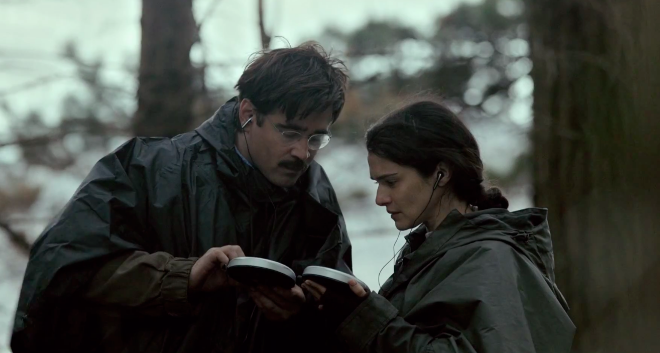
Greek filmmaker Yorgos Lanthimos is one of the most unique storytellers in cinema. His films are tense, funny alternative realities, with sarcastic views of human torment. His 2009 film Dogtooth is one of the most upsetting films that I've ever seen, and it's a testament to Lanthimos and the cast of that film that it still manages to be a brilliant dissection of unnatural human behavior. His latest movie, The Lobster, is his first English-language film, and it stars an international cast of Hollywood actors. Compared to Dogtooth, it has the levity of a Gary Marshall film, but for the many who may be introduced to Lanthimos with The Lobster, they'll get a strikingly funny film, with a number of disturbing moments. It's a marvelous film about the tyranny of love over the human race, the entrapment of society's disdain for lonely people, and the power of passion to overcome daunting odds. The film premiered a year ago at the Cannes Film Festival, and spent 2015 screening internationally at several festivals stacking rave receptions across the globe. Why A24 chose late Spring to unleash this audacious film is unknown. Not that time of year matters, The Lobster is a ingenious movie no matter what the season is. It takes place in a dystopian reality, where only couples are allowed to live in The City, while single people are sent to live in The Hotel. At The Hotel, if these single people are unable to find a mate in forty-five days, they are then transformed into an animal. People have been whittled down into muted, lustless beings who struggle through monotone conversations and live in a constant tension of inferiority. It's not just a stigma to be single, it's a crime.
Directed by Yorgos Lanthimos
****
Greek filmmaker Yorgos Lanthimos is one of the most unique storytellers in cinema. His films are tense, funny alternative realities, with sarcastic views of human torment. His 2009 film Dogtooth is one of the most upsetting films that I've ever seen, and it's a testament to Lanthimos and the cast of that film that it still manages to be a brilliant dissection of unnatural human behavior. His latest movie, The Lobster, is his first English-language film, and it stars an international cast of Hollywood actors. Compared to Dogtooth, it has the levity of a Gary Marshall film, but for the many who may be introduced to Lanthimos with The Lobster, they'll get a strikingly funny film, with a number of disturbing moments. It's a marvelous film about the tyranny of love over the human race, the entrapment of society's disdain for lonely people, and the power of passion to overcome daunting odds. The film premiered a year ago at the Cannes Film Festival, and spent 2015 screening internationally at several festivals stacking rave receptions across the globe. Why A24 chose late Spring to unleash this audacious film is unknown. Not that time of year matters, The Lobster is a ingenious movie no matter what the season is. It takes place in a dystopian reality, where only couples are allowed to live in The City, while single people are sent to live in The Hotel. At The Hotel, if these single people are unable to find a mate in forty-five days, they are then transformed into an animal. People have been whittled down into muted, lustless beings who struggle through monotone conversations and live in a constant tension of inferiority. It's not just a stigma to be single, it's a crime.
Monday, May 9, 2016
A Bigger Splash (**1/2)
A BIGGER SPLASH
Directed by Luca Guadagnino
**1/2
Filmmaker Luca Guadagnino doesn't mind embracing stereotypes of Italian sensuality, embracing themes of sex and passion with a no-holds-barred approach, and casting actors who are sure to be up to the task of stripping down and making that same embrace. His latest film, A Bigger Splash, has such a splendid sense of mischief, a nose for scoping out sex in the innermost center of its characters. At one moment, a character played by Dakota Johnson decries that she is cursed to "fall in love with every beautiful thing", while a character played by Matthias Schoenaerts responds to her that the affliction must be paralyzing. Here are two young beautiful actors in Johnson and Schoenaerts, and Guadagnino shows no apparent shame in filling his frames only with performers who can fill the quota of beauty. This isn't to say that love does not exist in the Italian filmmaker's universes; it does, but it is always undone by illicit longing. His 2009 film, I Am Love, was a masterful portrayal of a woman (played by Tilda Swinton) undone by a lustful act with a younger man. Human beings are always having sex with people they shouldn't, and Guadagnino is fascinated by this phenomenon. A Bigger Splash takes a magnifying glass to the kind of pain and distrust that is born out of the sexual composure of those without barriers. The characters are filled with demons that they refuse to face, instead pooling their emotions in physical embrace, in nudity, in the seductive landscapes of Southern Italy. They walk through vistas with sun-kissed skin, and Guadagnino's camera focuses so completely not only on their beauty but their unadulterated, pulsating inner turmoil. Films about sex are not usually this bare. A Bigger Splash is not shy or modest. It accepts drugs and rock n' roll and that other pesky thing that always completes the trilogy.
Directed by Luca Guadagnino
**1/2
Filmmaker Luca Guadagnino doesn't mind embracing stereotypes of Italian sensuality, embracing themes of sex and passion with a no-holds-barred approach, and casting actors who are sure to be up to the task of stripping down and making that same embrace. His latest film, A Bigger Splash, has such a splendid sense of mischief, a nose for scoping out sex in the innermost center of its characters. At one moment, a character played by Dakota Johnson decries that she is cursed to "fall in love with every beautiful thing", while a character played by Matthias Schoenaerts responds to her that the affliction must be paralyzing. Here are two young beautiful actors in Johnson and Schoenaerts, and Guadagnino shows no apparent shame in filling his frames only with performers who can fill the quota of beauty. This isn't to say that love does not exist in the Italian filmmaker's universes; it does, but it is always undone by illicit longing. His 2009 film, I Am Love, was a masterful portrayal of a woman (played by Tilda Swinton) undone by a lustful act with a younger man. Human beings are always having sex with people they shouldn't, and Guadagnino is fascinated by this phenomenon. A Bigger Splash takes a magnifying glass to the kind of pain and distrust that is born out of the sexual composure of those without barriers. The characters are filled with demons that they refuse to face, instead pooling their emotions in physical embrace, in nudity, in the seductive landscapes of Southern Italy. They walk through vistas with sun-kissed skin, and Guadagnino's camera focuses so completely not only on their beauty but their unadulterated, pulsating inner turmoil. Films about sex are not usually this bare. A Bigger Splash is not shy or modest. It accepts drugs and rock n' roll and that other pesky thing that always completes the trilogy.
Sunday, May 8, 2016
The Meddler (***1/2)
THE MEDDLER
Written and Directed by Lorene Scafaria
***1/2
What a wonderful film The Meddler is. A bittersweet comedy about love, grief and the type of agonizing familial relationships that fill you with guilt and dread. Susan Sarandon stars as Marnie, a Brooklynite widow living in Los Angeles to be close to her daughter, Lori (Rose Byrne). A year after her husband, and Lori's father, has passed, Marnie still struggles to fill the hours of the day. Despite her aimless activity, Marnie is filled with a generous - at times overbearing - spirit, and pools all her attention on Lori, who's going through her own form of grief, trying to recover from a devastating break-up with Jacob (Jason Ritter), a rising actor who left her for a younger woman. Marnie is persistent in her need to help her troubled, unmarried daughter. Lori works as a screenwriter, and her current job on a television pilot adds another layer of stress that isn't helped by Marnie's constant presence. Even when Marnie isn't around she calls incessantly, leaving long, babbling voicemails with detailed tales of her day. Lori cannot handle it, the lack of boundaries forcing her to be stern, even hurtful to her well-meaning mother. For Marnie, all of life seems fine to those around her. She gets along with everyone, including a Apple Store Genius Bar employee named Freddy (Jerrod Carmichael), and one of Lori's close friends Jillian (Cecily Strong). She doesn't find it strange to offer to give rides to Freddy so he can get to night school after work. What does she have to do that she can't help the young man out? She doesn't think twice about offering to pay for Jillian's proper wedding. Her late husband has left her with so much money, why not use it to help others who could use it? As Lori distances herself more and more from her grieving mother, Marnie finds startling ways to fill the void of the family that she's lost.
Written and Directed by Lorene Scafaria
***1/2
What a wonderful film The Meddler is. A bittersweet comedy about love, grief and the type of agonizing familial relationships that fill you with guilt and dread. Susan Sarandon stars as Marnie, a Brooklynite widow living in Los Angeles to be close to her daughter, Lori (Rose Byrne). A year after her husband, and Lori's father, has passed, Marnie still struggles to fill the hours of the day. Despite her aimless activity, Marnie is filled with a generous - at times overbearing - spirit, and pools all her attention on Lori, who's going through her own form of grief, trying to recover from a devastating break-up with Jacob (Jason Ritter), a rising actor who left her for a younger woman. Marnie is persistent in her need to help her troubled, unmarried daughter. Lori works as a screenwriter, and her current job on a television pilot adds another layer of stress that isn't helped by Marnie's constant presence. Even when Marnie isn't around she calls incessantly, leaving long, babbling voicemails with detailed tales of her day. Lori cannot handle it, the lack of boundaries forcing her to be stern, even hurtful to her well-meaning mother. For Marnie, all of life seems fine to those around her. She gets along with everyone, including a Apple Store Genius Bar employee named Freddy (Jerrod Carmichael), and one of Lori's close friends Jillian (Cecily Strong). She doesn't find it strange to offer to give rides to Freddy so he can get to night school after work. What does she have to do that she can't help the young man out? She doesn't think twice about offering to pay for Jillian's proper wedding. Her late husband has left her with so much money, why not use it to help others who could use it? As Lori distances herself more and more from her grieving mother, Marnie finds startling ways to fill the void of the family that she's lost.
Thursday, May 5, 2016
Podcast: Is 'Last Action Hero' Better Than 'Jurassic Park'?
We got a NEW episode of Is It Better Than Jurassic Park?! Gary Burns returns to chat with Scott and I to discuss another one of his childhood favorites, Arnold Schwarzenegger's Last Action Hero. This is definitely one of the most underrated Schwarzenegger films, but is it better than Jurassic Park? Listen and find out!
Friday, April 22, 2016
Green Room (**)
GREEN ROOM
Written and Directed by Jeremy Saulnier
**
If you were lucky enough to see Jeremy Saulnier's Blue Ruin in 2014, then you had the pleasure to catch one of the more captivating thrillers of that year; a film that had a refreshing, direct approach to violence and suspense. His follow-up, Green Room, is a much more standard genre piece, a brooding gore-fest with a much more recognizable cast. In one corner, you have the punk band The Ain't Rights, four broke, pretentious rockers touring the South by the skin of their teeth, siphoning gas from other cars when need be. In the other corner, we have a malicious group of white supremacists who happen to be running and populating the Ain't Rights' latest venue. When their bass player, Pat (Anton Yelchin), witnesses something he shouldn't have, the whole band is held in a terrifying hostage situation in the venue's green room, along with a young punk girl named Amber (Imogen Poots) who is the only one in the room familiar with these radicals' capabilities. Things get more intense when the club's owner - and movement leader - Darcy (Patrick Stewart) arrives and puts into place a complicated plan to eliminate each band member without risking culpability. At Green Room's most sensational, the film works as a chamber drama within the green room, with frantic scheming happening on both sides of the wall. Macon Blair, the star of Blue Ruin, makes an appearance in this film as well, as Gabe a Darcy confidante and worker at the venue, who is unsure of the actions of Darcy and his fellow Neo-Nazis. His moral dilemma is the closest thing the film comes to a heart, and Blair brings the same kind of hangdog sincerity, despite the absurdity of his character. Where Blue Ruin mixed aspects of noir with startling character study, Green Room seems only interested in carnage, and the violence in this film is much more creative and diabolical. It's a slasher film aspiring for the prestige of the Great American Indie. I'm not quite sure it gets there. Despite its simple premise, Saulnier's script is surprisingly dense, but it only makes the story more convoluted than necessary. Supporting performances from Alia Shawkat, Kai Lennox and Joe Cole are strong, but there isn't a whole lot a wit here. Just an extended sequence of extreme violence that adds up to little but cheap thrills, but Saulnier's version of cheap is still an interesting thing to watch.
Written and Directed by Jeremy Saulnier
**
If you were lucky enough to see Jeremy Saulnier's Blue Ruin in 2014, then you had the pleasure to catch one of the more captivating thrillers of that year; a film that had a refreshing, direct approach to violence and suspense. His follow-up, Green Room, is a much more standard genre piece, a brooding gore-fest with a much more recognizable cast. In one corner, you have the punk band The Ain't Rights, four broke, pretentious rockers touring the South by the skin of their teeth, siphoning gas from other cars when need be. In the other corner, we have a malicious group of white supremacists who happen to be running and populating the Ain't Rights' latest venue. When their bass player, Pat (Anton Yelchin), witnesses something he shouldn't have, the whole band is held in a terrifying hostage situation in the venue's green room, along with a young punk girl named Amber (Imogen Poots) who is the only one in the room familiar with these radicals' capabilities. Things get more intense when the club's owner - and movement leader - Darcy (Patrick Stewart) arrives and puts into place a complicated plan to eliminate each band member without risking culpability. At Green Room's most sensational, the film works as a chamber drama within the green room, with frantic scheming happening on both sides of the wall. Macon Blair, the star of Blue Ruin, makes an appearance in this film as well, as Gabe a Darcy confidante and worker at the venue, who is unsure of the actions of Darcy and his fellow Neo-Nazis. His moral dilemma is the closest thing the film comes to a heart, and Blair brings the same kind of hangdog sincerity, despite the absurdity of his character. Where Blue Ruin mixed aspects of noir with startling character study, Green Room seems only interested in carnage, and the violence in this film is much more creative and diabolical. It's a slasher film aspiring for the prestige of the Great American Indie. I'm not quite sure it gets there. Despite its simple premise, Saulnier's script is surprisingly dense, but it only makes the story more convoluted than necessary. Supporting performances from Alia Shawkat, Kai Lennox and Joe Cole are strong, but there isn't a whole lot a wit here. Just an extended sequence of extreme violence that adds up to little but cheap thrills, but Saulnier's version of cheap is still an interesting thing to watch.
Tuesday, April 12, 2016
Louder Than Bombs (***1/2)
LOUDER THAN BOMBS
Directed by Joachim Trier
***1/2
Norwegian filmmaker Joachim Trier has already shown that he's an unmatched talent in film right now. His third feature, Louder Than Bombs, is his first one in English. A plot description might suggest a limp novel adaptation, a maudlin tale of tragedy befallen by manipulated emotions - a much too common occurrence when great foreign directors try their hand at American stories. Instead, what we get is the kind of devastatingly effective familial melodrama that too many American filmmakers fail to make these days. It's stark, melancholy attitude is backed up by heartbreaking performances and a script that has a novelist's eye for details. Like his first two magnificent films, Reprise and Oslo, August 31st, the story's focus is minute, but its themes are expansive in a way that reflects the sadness of the human condition while maintaining that balance of honesty and romanticism that makes his films so wonderful. Transitioning from Norwegian to English (and from Oslo to New York), doesn't defang Trier; he still dwells in meditations of depression and loneliness, and Louder Than Bombs has a touching fondness for its characters' grief. In all three of his features, Trier explores sadness as an influential, sometimes even exhilarating experience. Creative people are undone by their inner turmoil, and Trier creates these universes where creation and tragedy work together in a cyclical enterprise that produces the beauty that humans depend on. That he's able to make these films while avoiding the cynical bleakness of his fellow Scandinavian filmmakers (like the infamous Lars von Trier and Thomas Vinterberg) sets him apart. There is a value to humanity, but it doesn't mean we're all happy about it.
Directed by Joachim Trier
***1/2
Norwegian filmmaker Joachim Trier has already shown that he's an unmatched talent in film right now. His third feature, Louder Than Bombs, is his first one in English. A plot description might suggest a limp novel adaptation, a maudlin tale of tragedy befallen by manipulated emotions - a much too common occurrence when great foreign directors try their hand at American stories. Instead, what we get is the kind of devastatingly effective familial melodrama that too many American filmmakers fail to make these days. It's stark, melancholy attitude is backed up by heartbreaking performances and a script that has a novelist's eye for details. Like his first two magnificent films, Reprise and Oslo, August 31st, the story's focus is minute, but its themes are expansive in a way that reflects the sadness of the human condition while maintaining that balance of honesty and romanticism that makes his films so wonderful. Transitioning from Norwegian to English (and from Oslo to New York), doesn't defang Trier; he still dwells in meditations of depression and loneliness, and Louder Than Bombs has a touching fondness for its characters' grief. In all three of his features, Trier explores sadness as an influential, sometimes even exhilarating experience. Creative people are undone by their inner turmoil, and Trier creates these universes where creation and tragedy work together in a cyclical enterprise that produces the beauty that humans depend on. That he's able to make these films while avoiding the cynical bleakness of his fellow Scandinavian filmmakers (like the infamous Lars von Trier and Thomas Vinterberg) sets him apart. There is a value to humanity, but it doesn't mean we're all happy about it.
Monday, April 11, 2016
Demolition (**)
Demolition
Directed by Jean-Marc Vallée
**
After Dallas Buyers Club and Wild, director Jean-Marc Vallée completes his trilogy of lost souls with his latest film, Demolition. Much like Wild, the film is a histrionic meditation on grief through the point-of-view of someone who mourns self-destructively. Vallée is working with Jake Gyllenhaal here, and for a filmmaker who seems to adore visceral visualization of emotion, Gyllenhaal seems like a perfect match. The 35-year-old actor has spent the last few years abandoning the concept of himself as a heartthrob, and revealing himself to be an incredibly immersive character actor. His performance here is strong, playing an exorbitantly wealthy finance man who's never worked hard for anything in his life who suddenly finds himself saddled with an array of unfamiliar feelings after the sudden, tragic death of his wife. Some may remember Gyllenhaal also starring in the 2002 film Moonlight Mile which pretty much had the same premise (in that film, it was a fiance that died). That film was sentimental - and was one of those early 00's indies that felt more like the director's Spotify playlist than a complete film. It took the usual course of action where these kinds of stories are concerned, containing a kind of mushy, heartfelt-ness that was a bit too sweet for the few who actually saw it. Both films concerned an ambivalent love upended by tragedy, but Demolition does not mince words about the behavior of its protagonist. It's hard to think of a more unlikeable character in which the audience is asked to expel so much empathy for.
Directed by Jean-Marc Vallée
**
After Dallas Buyers Club and Wild, director Jean-Marc Vallée completes his trilogy of lost souls with his latest film, Demolition. Much like Wild, the film is a histrionic meditation on grief through the point-of-view of someone who mourns self-destructively. Vallée is working with Jake Gyllenhaal here, and for a filmmaker who seems to adore visceral visualization of emotion, Gyllenhaal seems like a perfect match. The 35-year-old actor has spent the last few years abandoning the concept of himself as a heartthrob, and revealing himself to be an incredibly immersive character actor. His performance here is strong, playing an exorbitantly wealthy finance man who's never worked hard for anything in his life who suddenly finds himself saddled with an array of unfamiliar feelings after the sudden, tragic death of his wife. Some may remember Gyllenhaal also starring in the 2002 film Moonlight Mile which pretty much had the same premise (in that film, it was a fiance that died). That film was sentimental - and was one of those early 00's indies that felt more like the director's Spotify playlist than a complete film. It took the usual course of action where these kinds of stories are concerned, containing a kind of mushy, heartfelt-ness that was a bit too sweet for the few who actually saw it. Both films concerned an ambivalent love upended by tragedy, but Demolition does not mince words about the behavior of its protagonist. It's hard to think of a more unlikeable character in which the audience is asked to expel so much empathy for.
Podcast: Is 'Chicago' Better Than Jurassic Park?
New podcast episode! We're talking about Chicago with Bill Magee. Our first musical. Is it better than Jurassic Park? Listen and find out. It's gotta happen sometime.
Subscribe to:
Posts (Atom)